Platform Landing Zone
Company-wide foundation for governance, identity, security, networking, cost controls, and automation.
Open Platform Landing ZoneLast updated on


Guided landing zone presentation covering definition, timing, architecture layers, workload scope, accelerator implementation, and STACKIT managed delivery.
STACKIT
The sovereign European cloud provider behind the framework, delivering IaaS and PaaS from German and Austrian data centers with full digital independence.
Use this interactive map to explore the STACKIT service portfolio. Select a product or access tool to open its current documentation or related Cloud Framework asset.
The map is a navigation aid rather than a lifecycle commitment. Check each linked product page for current regions, availability, service levels, and release status.
Browse all STACKIT product documentation Open the documentationA landing zone is the shared runway for governed migration. Establish its platform stream during Design and Mobilize, so migration waves inherit a working baseline for controlled delivery and stable operations.
Introduce a landing zone as the structured cloud foundation for governed operations on STACKIT. Use this opening to align stakeholders on the key questions: which guardrails are mandatory, who owns them, and what application needs must be supported.
A landing zone is the structured cloud foundation that defines how your organization operates on STACKIT from day 1. It combines governance, identity, security, network design, cost controls, and automation into one coherent baseline.
Without this foundation, migration waves typically stall due to missing approvals, inconsistent controls, and repeated platform decisions.
The following visual summarizes the core components that should be addressed for a reliable platform baseline.
Start the landing-zone stream as early as possible, in parallel with discovery.
The practical model is a dual track: establish the platform baseline early, then refine application landing zone templates as discovery insights mature.
Platform Landing Zone
Company-wide foundation for governance, identity, security, networking, cost controls, and automation.
Open Platform Landing ZoneApplication Landing Zone
Workload-specific implementation patterns derived from the platform baseline and discovery findings.
Open Application Landing ZoneTo design a landing zone effectively, enterprises usually provide:
To accelerate delivery, STACKIT provides concrete best practices and reusable templates:






Establish the organizational structure, project boundaries, and ownership model that make landing-zone governance repeatable across teams and environments.
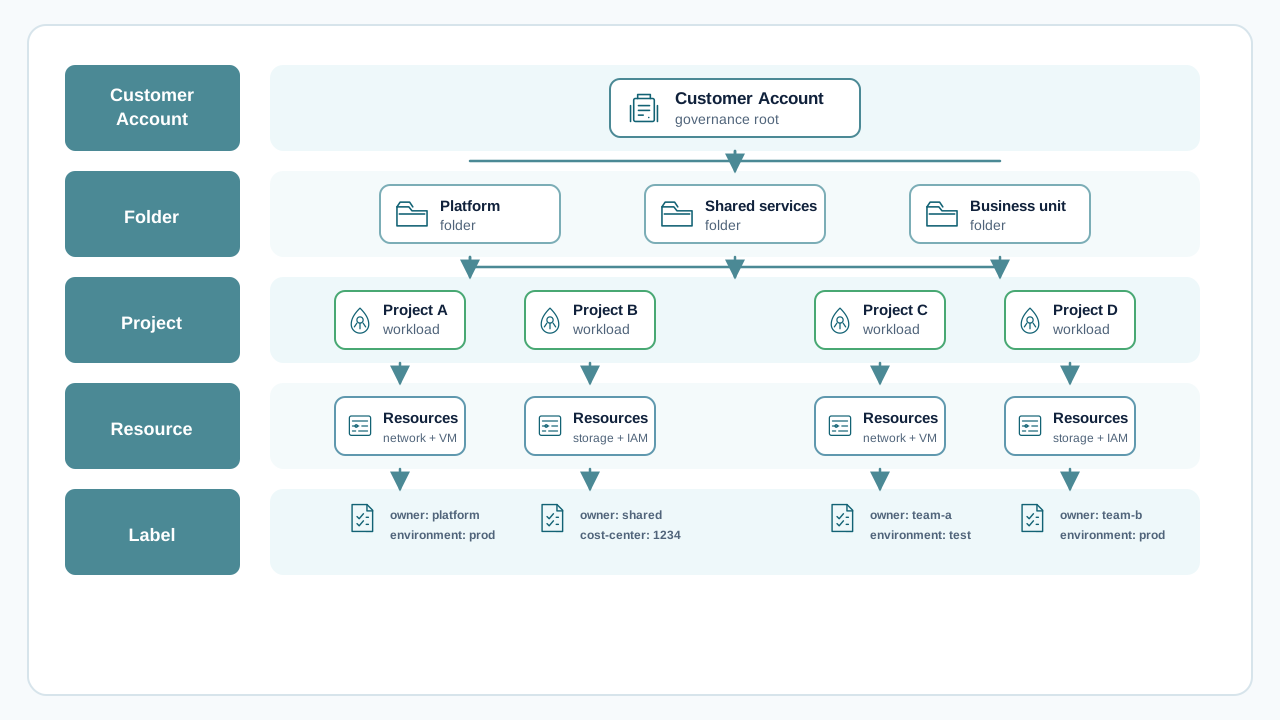
Account governance defines how you separate environments, teams, and responsibilities in a way that remains auditable and scalable.
It creates the organizational control plane for migration waves: where workloads are hosted, who owns which scope, and how new projects are added without bypassing guardrails.
Governance and Decision Making assigns decision rights and escalation paths for these account, folder, and project boundaries.
IAM ensures that every action on the platform is attributable, authorized, and aligned with enterprise security requirements.
For migration landing zones, IAM is the control backbone that connects human identities, machine identities, and authorization rules into one governable operating model.
Map security and compliance topics early so control requirements, evidence, sovereignty decisions, and zero-trust principles inform the landing-zone design.
Security and Compliance define the guardrails for migration decisions across design, landing zones, and migration delivery.
The goal is to translate policy intent into enforceable controls and verifiable evidence from day 1.
Use this semantic map as a structured entry point into all subtopics of this module.
Security and Compliance are not a final hardening step. They shape core platform decisions from the beginning:
This module provides the cross-cutting baseline that must be used in both contexts.
Cloud migration changes security assumptions:
Most enterprise target states need both approaches with clear selection criteria per workload class.
For many migration programs, compliance, and digital sovereignty are primary drivers.
During on-premises to cloud migration, enterprise compliance obligations remain unchanged in intent.
What changes is how controls are implemented, how evidence is produced, and how operating responsibilities are distributed.
Typical compliance categories to structure migration decisions:
Operating Model and Governance
Define roles, decision rights, ownership, and mandatory Security and Compliance checkpoints.
Open moduleArchitecture Patterns
Define where boundary-centric controls remain mandatory and where Zero Trust controls are primary.
Open moduleSecurity by Design Baseline
Define baseline requirements and recommendations for identity, network, workload, and data protection.
Open moduleControls and Evidence Pipeline
Define preventive and detective controls and automated compliance evidence generation.
Open moduleOn-Premises to Cloud Shift
Clarify which security assumptions and operating practices must change in cloud migration.
Open moduleDigital Sovereignty and CSF Alignment
Translate sovereignty, CSF, and ES3 requirements into architecture, controls, and evidence responsibilities.
Open moduleIn landing zones, Security, and Compliance are implementation constraints that must follow the cross-cutting design baseline from the dedicated module.
Use this page to apply module outcomes to platform and application landing-zone decisions.
Translate the compute-hardening recommendations into an owned, testable VM baseline before onboarding workloads.
The security of your virtual machines (VMs) is paramount to ensuring the integrity of your infrastructure. The following are recommended measures to harden the security of your VMs:
sudo for administrative tasks instead. Implement strong password policies and remove or disable unused users and groups. For secure authentication, we recommend using SSH keys.chmod and chown. The sticky bit should be set for global directories, such as /tmp, and ensure that there are no non-root files in directories such as /bin, /usr/bin, and /sbin.iptables or firewalld, and allow only necessary ports. Deny all access by default and whitelist only the necessary services. You can also use STACKIT Security Groups to allow only necessary ports.sshd\_config. Use SSH keys instead of passwords and disable empty passwords by setting PermitEmptyPasswords no.You can find additional recommendations and guidelines at the following links:
This section is copied from the STACKIT docs automatically, several times a day. It cannot be changed here. Changes belong in the STACKIT docs.
Validate service-local access rules separately from network routing. The following ACL behavior is specific to PostgreSQL Flex; confirm the corresponding rules for every other managed service rather than assuming identical defaults.
With the ACL entries, you control which source IPs are allowed to connect to your instance. Note, that this is an additional security layer and does not replace the need for proper authentication and security best practices. There are two predefined entries: 193.148.160.0/19 and 45.129.40.0/21. They ensure that you can access your instance from STACKIT cloud services. If you want to access your instance from the public net, you need to add the client’s IPv4 address or subnet. The entries follow the CIDR notation. If you want to allow a single IP address (e.g. single host), then set 32as the subnet parameter. E.g. to allow a host with the source IPv4 address of 93.229.84.137, add 93.229.84.137/32 as ACL entry. At the moment, you can’t add IPv6 addresses.
Do not set 0.0.0.0/0 as an ACL IP, because then your instance can be accessed from every IP.
This section is copied from the STACKIT docs automatically, several times a day. It cannot be changed here. Changes belong in the STACKIT docs.
Define segmentation, connectivity, DNS, routing, and secure communication patterns for shared services and workload environments.
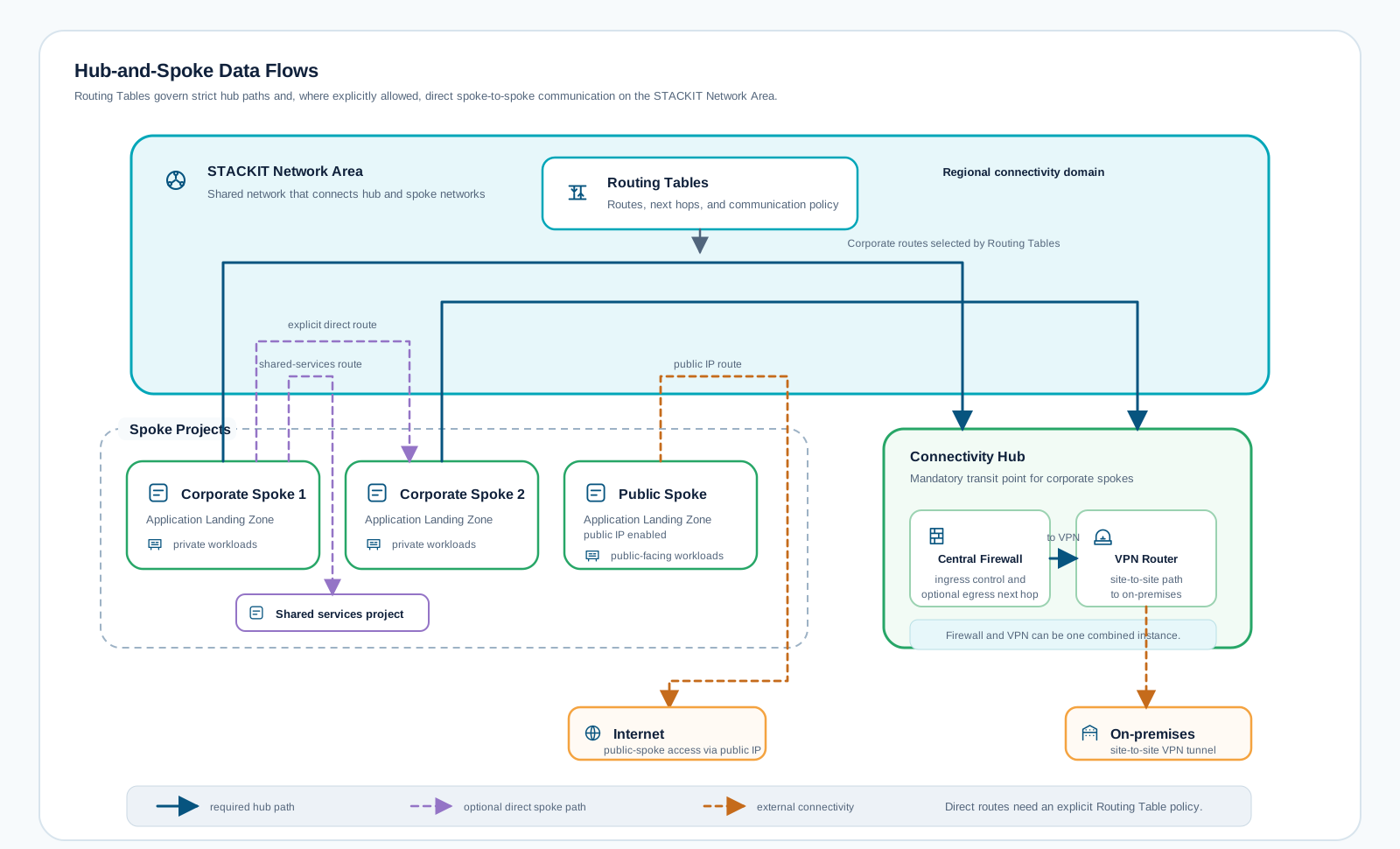
Network architecture defines how workloads communicate securely, how traffic is segmented, and how central connectivity services are governed across shared and project-specific landing zones.
In most enterprise migrations, this topic is less about individual subnets and more about operating a controlled connectivity model over time: who connects which project, via which paths, and under which guardrails.
Confirm the product connectivity boundaries before choosing a topology. Network Area scope, route precedence, and VPN gateway behavior constrain the design; they do not replace the workload connectivity matrix or security approval.
The source shows pictures here that this page leaves out (1). See them in Concepts
The STACKIT Network Area (SNA) allows projects within an organization to be connected to each other on a network level. This makes it possible to connect various resources of the projects within an SNA and also simplifies the connection with on-prem environments (hybrid cloud).
An SNA project differs from a public project in the fact that it is connected to an internal transfer network. When creating a network in a SNA project, the address range is defined using the specified prefix length from the network ranges of the SNA. To make the connectivity within the SNA projects available, the project router gets connected to the SNA transfer network. When editing the networks of SNA projects, the routing table of all project routers is automatically adjusted, no manual adjustment is necessary. Access control at network level is carried out exclusively by security groups, all incoming traffic is denied by default.
SNA is a global resource which you need to enable for the regions you want to use it in. Currently traffic between regions is only possible via the public internet. Private connectivity between regions inside of an SNA is planned for the future.
Example topology of an SNA with 2 projects:
This section is copied from the STACKIT docs automatically, several times a day. It cannot be changed here. Changes belong in the STACKIT docs.
Routing tables consist of different types of routes serving different purposes and having a different priority in the overall routing context. Route types with a higher priority value are preferred over lower priority ones if they have the same prefix length. If routes of the same route type have the same prefix length, equal-cost-multi-path (ECMP) is performed.
| priority | route type | description |
|---|---|---|
| 4 | system routes | System routes are automatically generated routes for connectivity between projects inside an SNA. System routes are enabled by default for routing tables but can be disabled to manage traffic and isolation within a network environment. |
| 3 | service routes | Service routes are routes which are added by a STACKIT service to reach it. Service routes are always enabled and can’t be disabled/removed by the user directly. |
| 2 | static routes | Static routes are routes which are added by a user. They can have different next-hops such as an IP-address, black hole or the internet. |
| 1 | dynamic routes | Dynamic routes are routes which are learned through a dynamic routing protocol like BGP. Dynamic routes are enabled by default for routing tables but can be disabled. |
This section is copied from the STACKIT docs automatically, several times a day. It cannot be changed here. Changes belong in the STACKIT docs.
A Virtual Private Network (VPN) with STACKIT creates a secure, encrypted connection over the internet between your remote network and your STACKIT Network Area (SNA). This secure tunnel allows data to be transmitted safely, protecting it from eavesdropping, interception, or unauthorized access.
With STACKIT VPN, you can securely connect to your STACKIT Network Area, enabling access to its resources as if you were directly connected to the remote network. This capability is particularly useful for accessing services, applications, and data within the SNA from remote locations, ensuring both privacy and security in all communications.
A STACKIT VPN typically consists of two key components; the VPN gateway and the VPN connection:
STACKIT VPN is an essential tool for securely connecting distributed resources, enabling remote access to cloud-based services while maintaining the integrity and privacy of your data within the STACKIT cloud environment.
This section is copied from the STACKIT docs automatically, several times a day. It cannot be changed here. Changes belong in the STACKIT docs.
Cost management makes cloud spend visible, attributable, and controllable across migration waves and steady-state operations.
For migration landing zones, this requires a shared financial control model across platform teams, application teams, and business stakeholders.
FinOps should be embedded from the beginning of landing zone design, not added after migration waves start.
Governance and Decision Making and Measurement and Continuous Improvement assign FinOps decision rights and turn financial signals into improvement actions.
Automation ensures that landing-zone capabilities are reproducible, versioned, and tested instead of manually configured.
For migration landing zones, automation is the delivery backbone that connects platform APIs, IaC tools, developer workflows, and release controls into one reliable operating model.
Terraform or OpenTofu and Ansible solve different parts of one delivery workflow. Keep the boundary explicit so infrastructure changes remain reviewable and host configuration remains repeatable.
Terraform / OpenTofu
Own the infrastructure lifecycle: projects, networks, security controls, compute, storage, managed services, and the outputs required by configuration management.
Ansible
Own configuration inside the reachable target: operating-system packages, middleware, application artifacts, service units, and workload-level validation.
Do not use provisioners or ad hoc scripts to blur ownership between both layers. Triggering Ansible from Terraform can be a practical bridge, but each tool must remain independently understandable, testable, and rerunnable.
A platform landing zone is the company-wide target operating baseline for cloud adoption on STACKIT. It defines the cross-cutting controls and platform guardrails that every product team must inherit.
Without this baseline, migration teams usually face inconsistent controls, duplicated design decisions, and delayed approvals.
Account governance
Structure organizations, projects, and environments with clear ownership boundaries.
Identity and access
Define IAM model, role patterns, least-privilege principles, and separation of duties.
Security and compliance
Implement mandatory controls, logging, evidence pathways, and policy enforcement.
Network architecture
Define segmentation, connectivity patterns, and secure communication standards.
Cost management
Establish tagging, budget controls, chargeback/showback, and cost transparency.
Automation
Provision and evolve the baseline through OpenTofu/Terraform-based Infrastructure as Code.
A platform landing zone is the company-wide target operating baseline for cloud adoption on STACKIT. It defines the cross-cutting controls and platform guardrails that every product team must inherit.
Without this baseline, migration teams usually face inconsistent controls, duplicated design decisions, and delayed approvals.
Account governance
Structure organizations, projects, and environments with clear ownership boundaries.
Identity and access
Define IAM model, role patterns, least-privilege principles, and separation of duties.
Security and compliance
Implement mandatory controls, logging, evidence pathways, and policy enforcement.
Network architecture
Define segmentation, connectivity patterns, and secure communication standards.
Cost management
Establish tagging, budget controls, chargeback/showback, and cost transparency.
Automation
Provision and evolve the baseline through OpenTofu/Terraform-based Infrastructure as Code.
A platform landing zone is the company-wide target operating baseline for cloud adoption on STACKIT. It defines the cross-cutting controls and platform guardrails that every product team must inherit.
Without this baseline, migration teams usually face inconsistent controls, duplicated design decisions, and delayed approvals.
Account governance
Structure organizations, projects, and environments with clear ownership boundaries.
Identity and access
Define IAM model, role patterns, least-privilege principles, and separation of duties.
Security and compliance
Implement mandatory controls, logging, evidence pathways, and policy enforcement.
Network architecture
Define segmentation, connectivity patterns, and secure communication standards.
Cost management
Establish tagging, budget controls, chargeback/showback, and cost transparency.
Automation
Provision and evolve the baseline through OpenTofu/Terraform-based Infrastructure as Code.
A platform landing zone is the company-wide target operating baseline for cloud adoption on STACKIT. It defines the cross-cutting controls and platform guardrails that every product team must inherit.
Without this baseline, migration teams usually face inconsistent controls, duplicated design decisions, and delayed approvals.
Account governance
Structure organizations, projects, and environments with clear ownership boundaries.
Identity and access
Define IAM model, role patterns, least-privilege principles, and separation of duties.
Security and compliance
Implement mandatory controls, logging, evidence pathways, and policy enforcement.
Network architecture
Define segmentation, connectivity patterns, and secure communication standards.
Cost management
Establish tagging, budget controls, chargeback/showback, and cost transparency.
Automation
Provision and evolve the baseline through OpenTofu/Terraform-based Infrastructure as Code.
Use the selected R-strategy and target architecture for each application to derive the landing-zone capabilities, controls, connectivity, and service patterns its migration requires.
The Design module creates the executable migration design for each application identified in Discovery. It is not a generic architecture exercise. The target is a concrete design package that a migration factory can run with predictable quality.
Target design per application
Defines workload architecture, service choices, integration approach, and constraints in the STACKIT context.
R-strategy-backed decision record
Documents the selected migration strategy and why alternatives were rejected.
Factory-ready migration runbook
Provides a step-by-step procedure for run teams, including rollback and validation checkpoints.
Handover package
Delivers all required inputs to Migration Factory Setup, Landing Zone, and Migration Plan.
These modules are connected, but they have different responsibilities:
Design (this module)
Decides target design and migration strategy per application and creates executable runbooks.
Migration Factory Setup
Enables delivery by selecting and preparing the right factory model, partner setup, and tooling stack.
Landing Zone
Provides the platform foundation and governance controls that target designs must comply with.
Migration Plan
Converts completed designs into realistic waves, sequencing, dependencies, and delivery milestones.
The R-strategy model is the core decision framework in this module. For each application, the selected R-strategy must be justified with architecture, business, risk, and operability evidence.
The diagram is not only an orientation aid. It is the shared decision and handover spine across Design, Landing Zones, Migration Factory Setup, and Migration Plan.
Consolidate inventory, dependency map, risk profile, and non-functional constraints before strategy branching starts.
Prioritize workload candidates by criticality, effort, and wave feasibility to focus design capacity where delivery risk is highest.
Select the right R-strategy per workload and route into the dedicated strategy page with explicit rationale and alternatives considered.
Run a shared quality gate across architecture, security/compliance, runbook quality, and operating readiness before approving wave execution.
Prepare controlled handover into migration execution with release readiness, communication model, and clearly assigned ownership for wave run and escalation paths.
Finalize production handover criteria and Day-1 operating baseline so migrated workloads enter run operations with clear accountability and evidence.
At minimum, each application package should include:
Use a dedicated pattern page to define a concrete target architecture before selecting the migration runbook.
In addition to R-strategy, use the workload lens to classify what is migrated and to select feasible implementation variants with explicit boundary conditions.
AI-assisted design assets support architects in turning application requirements, source-service context, and R-strategy options into reviewable target-design proposals. Use their outputs as input for architecture, security, platform, and business validation before approving a migration path.






Migration planning quality depends on design quality. Wave sequencing, factory throughput, and delivery risk are directly influenced by how precise the target designs and run books are. In practice, incomplete designs lead to unstable waves and avoidable delivery delays.
An application landing zone is a workload-specific implementation blueprint derived from the platform landing zone baseline.
It translates enterprise guardrails into practical patterns for concrete application types, for example VM-centric Rehost, containerized workloads, or data platform workloads.
Application landing zones are not designed in isolation. They require validated discovery input for dependencies, data sensitivity, runtime behavior, and operational constraints.
Typical discovery-driven design inputs:
Rehost-ready pattern
Minimal change target for VM-based workloads with inherited central controls.
Container platform pattern
Segmented, policy-driven setup for Kubernetes-based workload groups.
Data workload pattern
Landing zone profile for data services, integration paths, and stricter controls.
Shared service pattern
Isolated setup for foundational services used by multiple product teams.
An application landing zone is a workload-specific implementation blueprint derived from the platform landing zone baseline.
It translates enterprise guardrails into practical patterns for concrete application types, for example VM-centric Rehost, containerized workloads, or data platform workloads.
Application landing zones are not designed in isolation. They require validated discovery input for dependencies, data sensitivity, runtime behavior, and operational constraints.
Typical discovery-driven design inputs:
Rehost-ready pattern
Minimal change target for VM-based workloads with inherited central controls.
Container platform pattern
Segmented, policy-driven setup for Kubernetes-based workload groups.
Data workload pattern
Landing zone profile for data services, integration paths, and stricter controls.
Shared service pattern
Isolated setup for foundational services used by multiple product teams.
An application landing zone is a workload-specific implementation blueprint derived from the platform landing zone baseline.
It translates enterprise guardrails into practical patterns for concrete application types, for example VM-centric Rehost, containerized workloads, or data platform workloads.
Application landing zones are not designed in isolation. They require validated discovery input for dependencies, data sensitivity, runtime behavior, and operational constraints.
Typical discovery-driven design inputs:
Rehost-ready pattern
Minimal change target for VM-based workloads with inherited central controls.
Container platform pattern
Segmented, policy-driven setup for Kubernetes-based workload groups.
Data workload pattern
Landing zone profile for data services, integration paths, and stricter controls.
Shared service pattern
Isolated setup for foundational services used by multiple product teams.
Discovery is one of the first and most critical modules in the Design and Mobilize phase. It refines Rapid Discovery results and adds the depth needed to make architecture and migration-wave decisions with confidence.
The primary objective is to establish a realistic, evidence-based understanding of the current IT landscape, business priorities, and organizational readiness before detailed target design and migration planning are finalized.
Complete baseline
Create a reliable application and infrastructure baseline that goes beyond pure quantities.
Dependency transparency
Identify technical and process dependencies to avoid hidden migration blockers.
Business alignment
Link technical findings with business criticality, timelines, and risk tolerance.
Planning readiness
Produce decision-ready input for target design and migration-wave planning.
Inventory
Comprehensive capture of servers, virtual machines, databases, middleware, and applications.
Dependency analysis
Mapping of communication paths and runtime dependencies between systems and applications.
Resource utilization
Analysis of actual CPU, memory, storage, and I/O behavior over a representative period.
Operational context
Collection of backup, patching, SLA, compliance, and operational constraints.
Application owner input
Structured questionnaires and interviews to validate assumptions and close data gaps.
In practice, Discovery is often run together with STACKIT partners. Partners typically use their own tooling landscape to collect and normalize technical data into a central repository. Many programs also trigger targeted questionnaires for application owners directly from these tools to enrich technical findings with business and operational context.
This combined model improves speed and consistency while keeping stakeholder validation built into the process.
Discovery intentionally combines two evidence streams that complement each other:
Neither stream is sufficient on its own. Technical evidence without owner context can misclassify critical workloads, while human input without technical grounding can hide coupling and capacity risks. Discovery quality depends on reconciling both streams into one decision-ready view.
The following diagram shows how Discovery transforms technical and stakeholder input into decision-ready outputs for the downstream modules.
During Discovery, tooling commonly applies the following analysis patterns:
These analyses establish the technical fact base. The human-driven stream then validates, prioritizes, and contextualizes these findings for executable migration decisions.
Use AI-assisted discovery assets to structure workload inputs, service mapping, readiness findings, and R-strategy signals before architects validate the resulting discovery baseline.
Discovery outputs are directly reused by the next modules in Design and Mobilize:
Design
Uses dependency, capacity, and risk insights to shape target architecture options.
Security and Compliance
Uses data classification and control gaps to define prioritized security requirements.
Landing Zone
Uses platform and governance constraints to define foundational setup decisions.
Migration Plan
Uses move groups, criticality, and sequencing constraints for realistic wave planning.
Operating Model and Business Case
Uses ownership, process impact, and value/risk signals for staffing and investment priorities.
At minimum, Discovery should produce the following outputs:
These outputs are essential prerequisites for continuing with detailed design work and a credible migration plan.
An application landing zone is a workload-specific implementation blueprint derived from the platform landing zone baseline.
It translates enterprise guardrails into practical patterns for concrete application types, for example VM-centric Rehost, containerized workloads, or data platform workloads.
Application landing zones are not designed in isolation. They require validated discovery input for dependencies, data sensitivity, runtime behavior, and operational constraints.
Typical discovery-driven design inputs:
Rehost-ready pattern
Minimal change target for VM-based workloads with inherited central controls.
Container platform pattern
Segmented, policy-driven setup for Kubernetes-based workload groups.
Data workload pattern
Landing zone profile for data services, integration paths, and stricter controls.
Shared service pattern
Isolated setup for foundational services used by multiple product teams.
An application landing zone is a workload-specific implementation blueprint derived from the platform landing zone baseline.
It translates enterprise guardrails into practical patterns for concrete application types, for example VM-centric Rehost, containerized workloads, or data platform workloads.
Application landing zones are not designed in isolation. They require validated discovery input for dependencies, data sensitivity, runtime behavior, and operational constraints.
Typical discovery-driven design inputs:
Rehost-ready pattern
Minimal change target for VM-based workloads with inherited central controls.
Container platform pattern
Segmented, policy-driven setup for Kubernetes-based workload groups.
Data workload pattern
Landing zone profile for data services, integration paths, and stricter controls.
Shared service pattern
Isolated setup for foundational services used by multiple product teams.
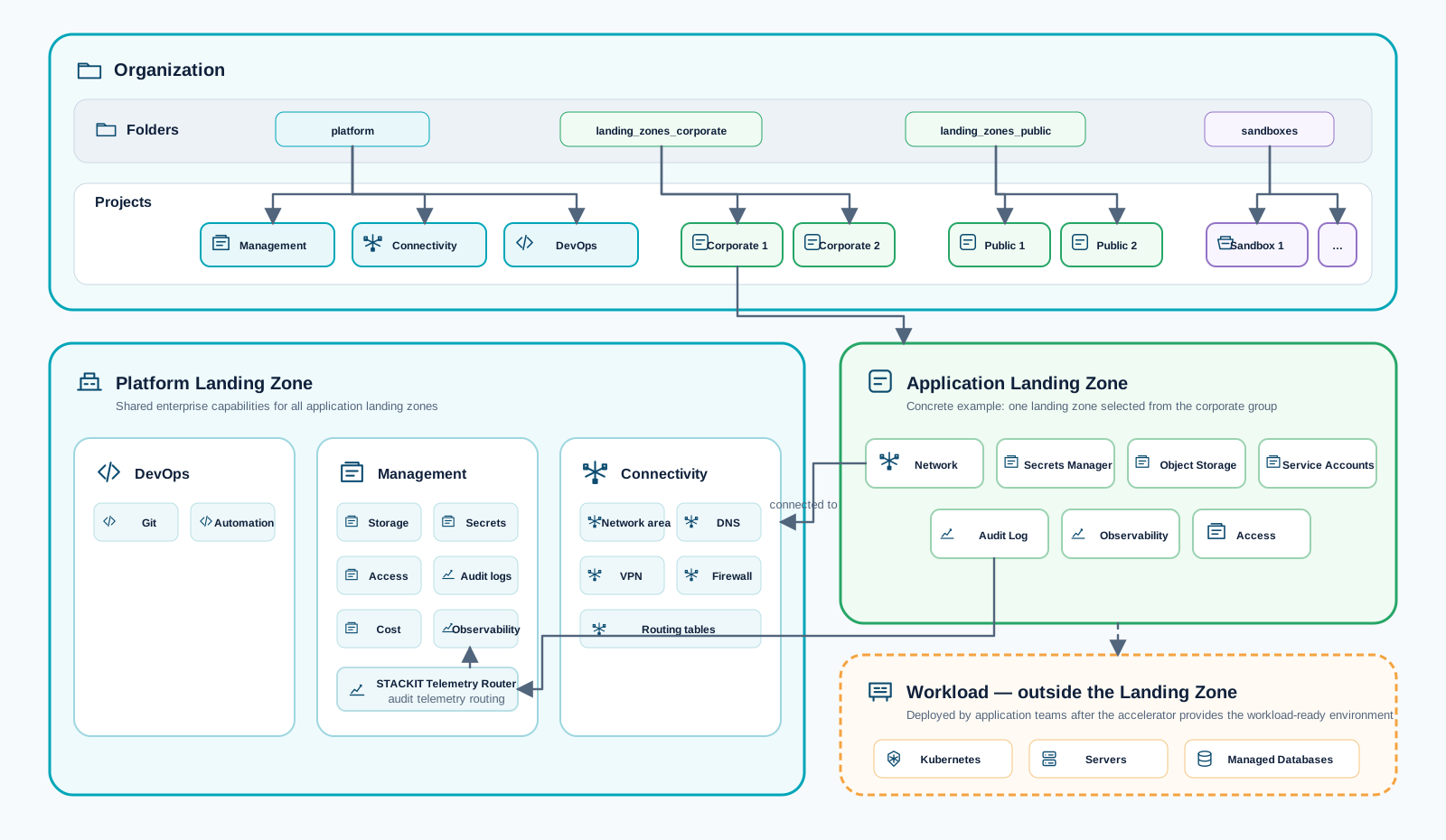
This asset provides a reusable foundation for implementing a STACKIT platform landing zone. It is designed for enterprise environments that need a structured baseline for governance, security, networking, cost controls, and automation.
Repository:
This repository is a single root-module accelerator with modular submodules.
src/main.tf orchestrates all platform and landing-zone building blocks.src/config/.The repository provides eight reference configurations in src/config/. Choose the simplest
topology that satisfies the required network, security, organizational, tenant, and regional
boundaries.
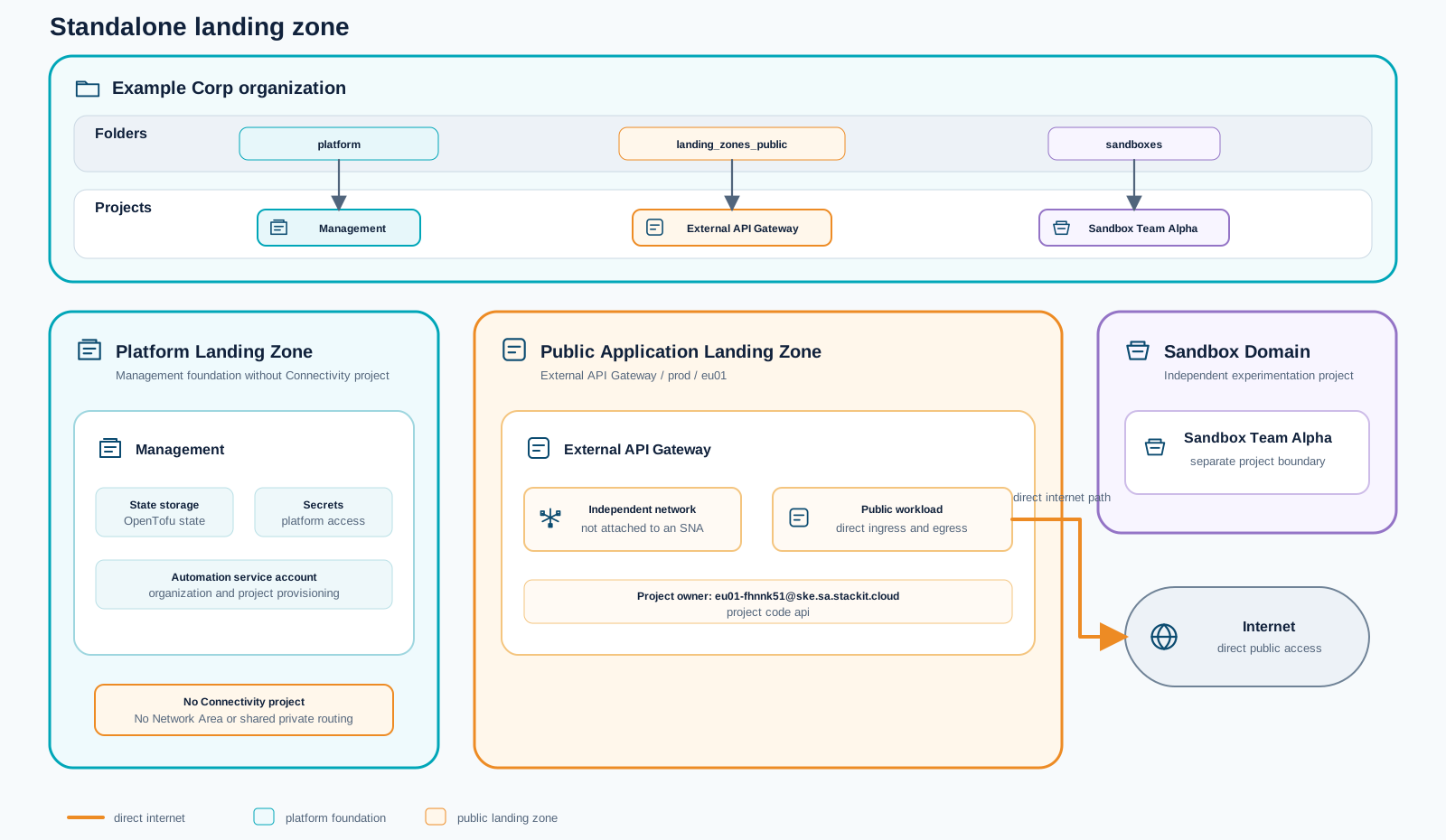
Use standalone.tfvars for the smallest foundation: governance, management, a sandbox, and a
public application landing zone with its own network and direct internet access. It creates no
shared Network Area or connectivity hub, making it suitable when workloads do not require private
east-west connectivity or central DNS.
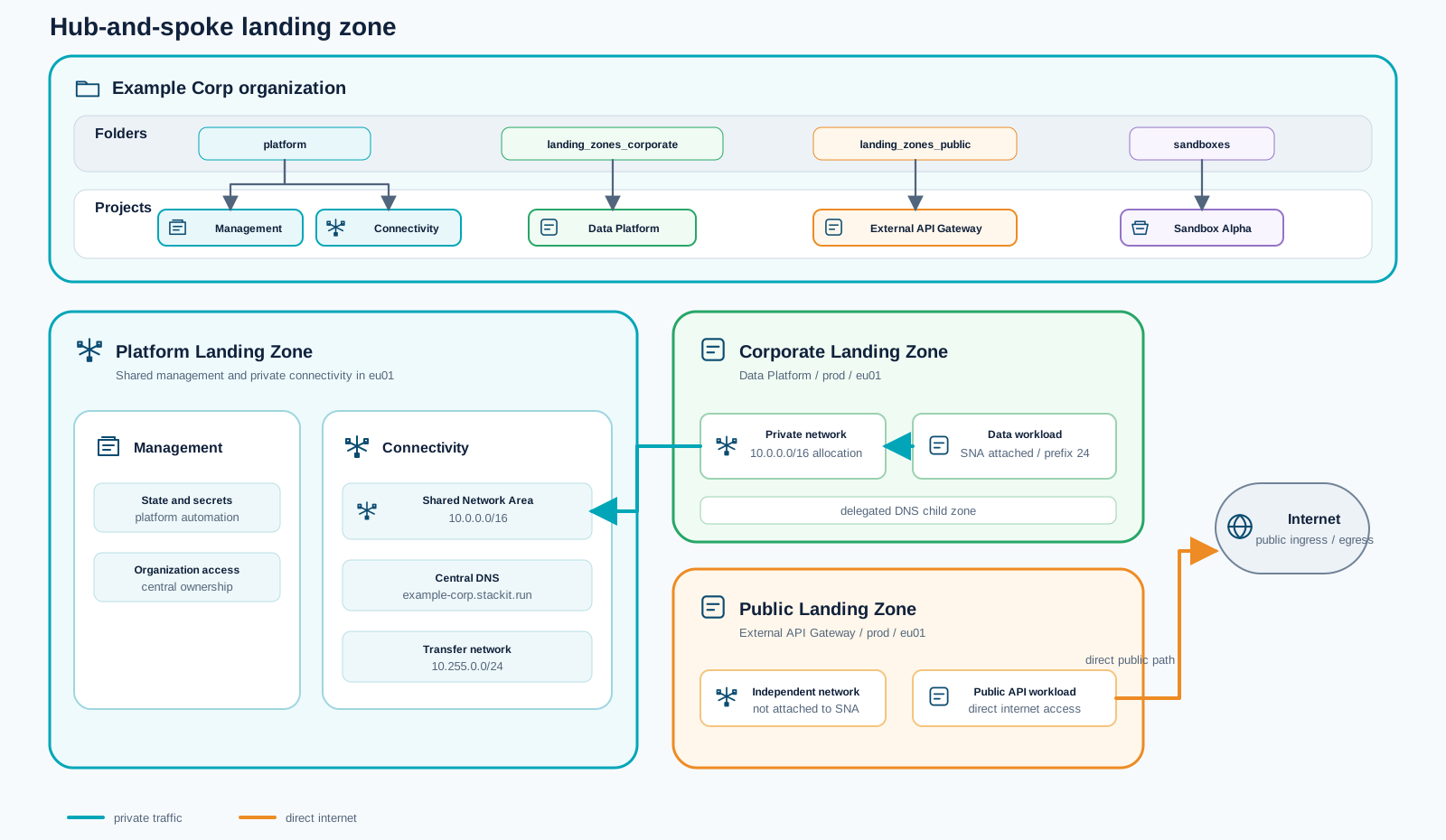
Use hub-and-spoke.tfvars when corporate workloads need shared private connectivity. A central
connectivity project provides the Network Area and DNS, the corporate data platform joins that
private domain, and public workloads retain independent networks with direct internet access.
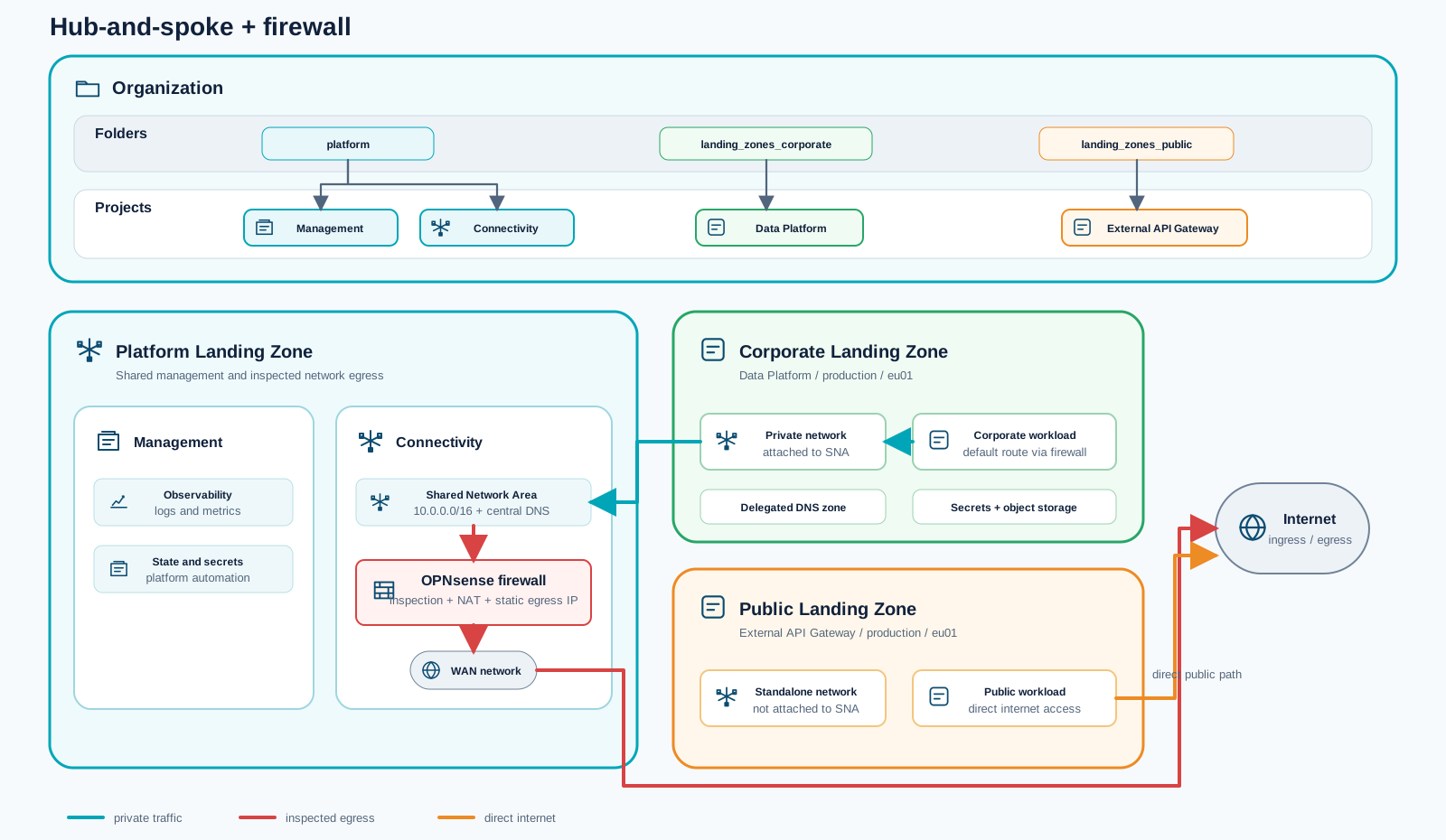
Use hub-and-spoke-firewall.tfvars when corporate egress needs a consistent inspection and control
point. It extends the shared Network Area with an OPNsense firewall and steers corporate default
routes through the appliance, while public landing zones remain directly connected.
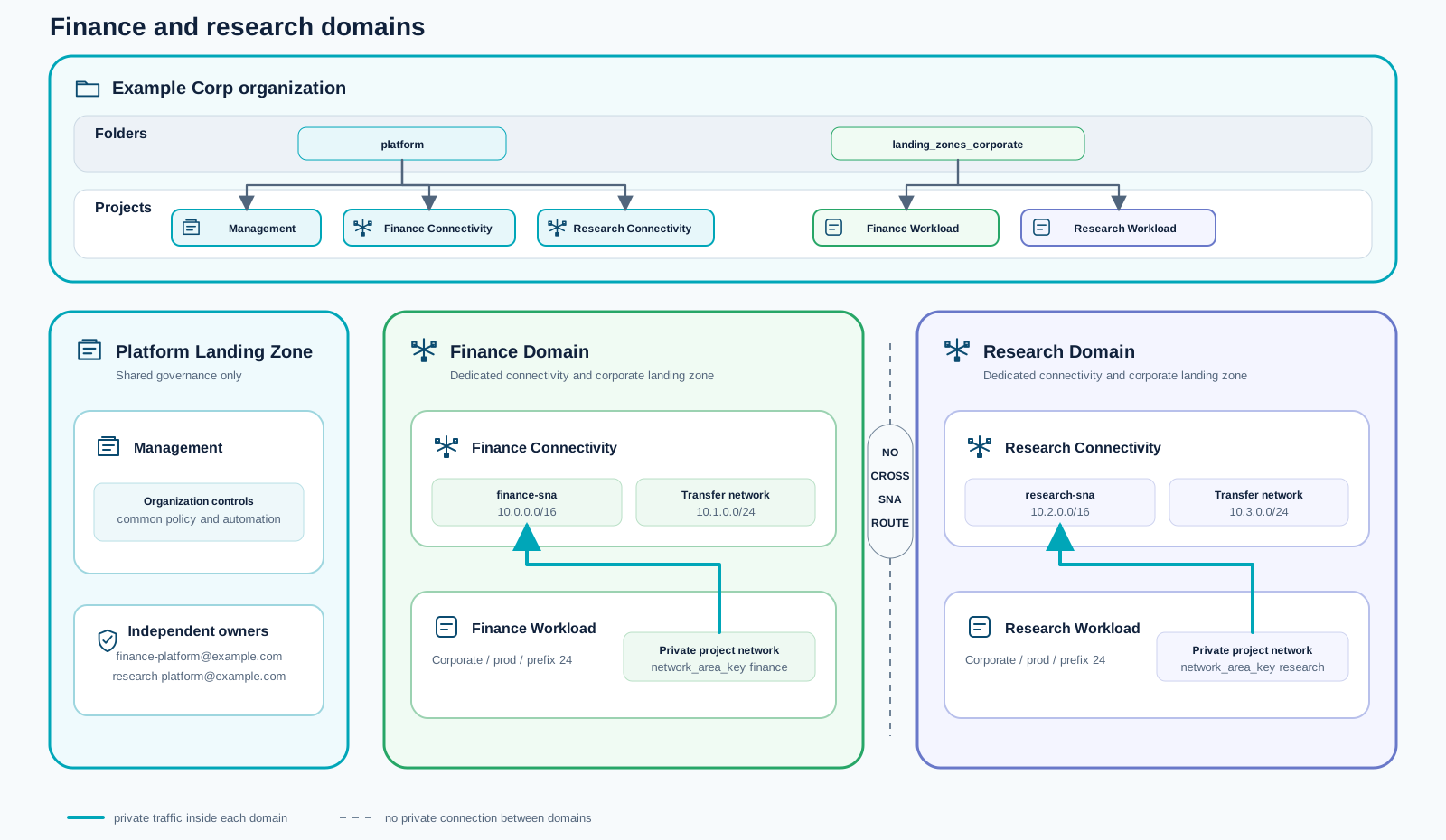
Use hub-and-spoke-finance-research.tfvars when business units require independent ownership and
private connectivity. Finance and research each receive their own address plan, connectivity
project, Network Area, and workload landing zone within the same STACKIT organization.
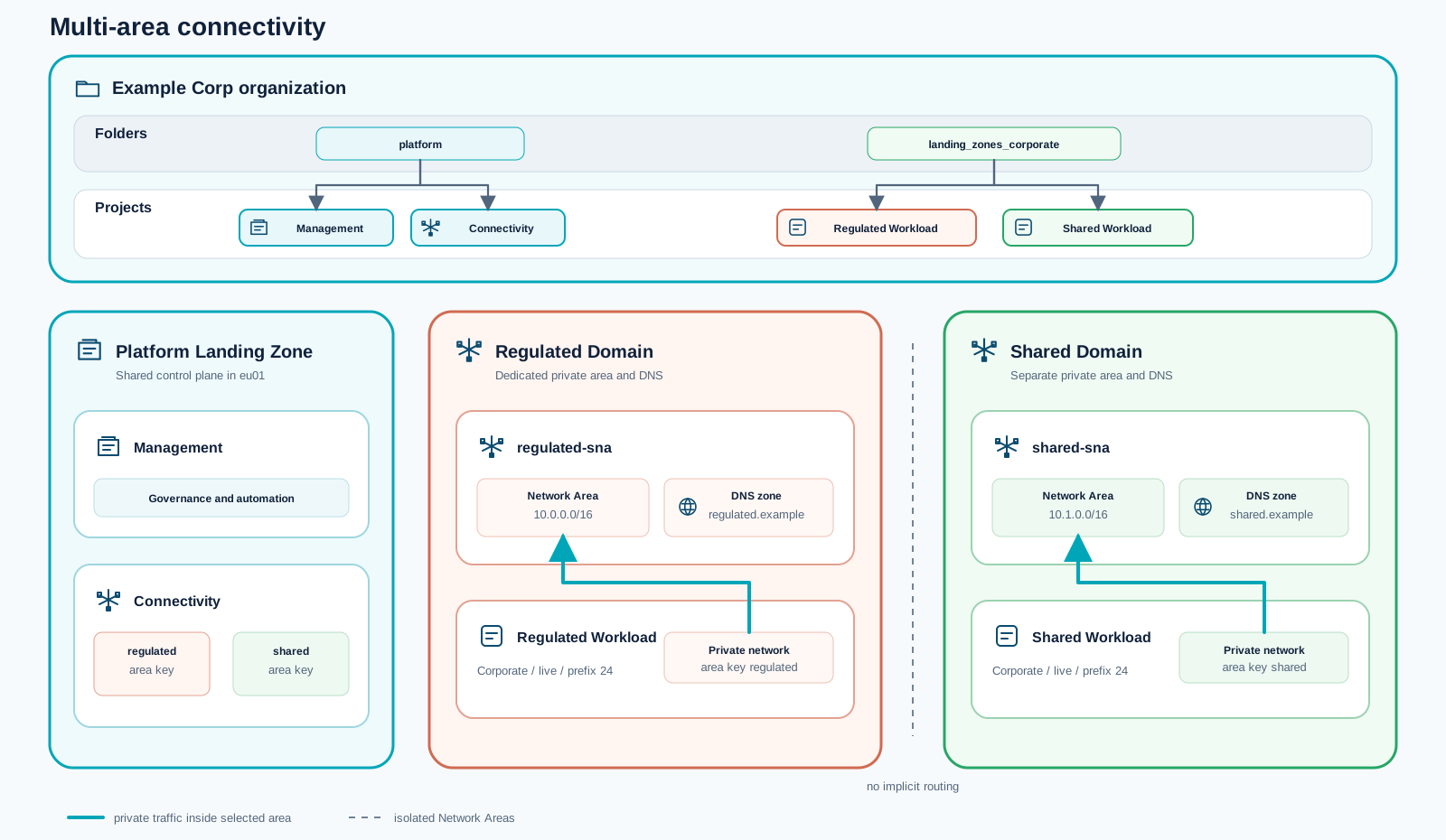
Use hub-and-spoke-multi-area.tfvars when regulated and shared workloads must occupy separate
private connectivity domains. Each domain has its own Network Area and DNS zone, with no implicit
routing between them.
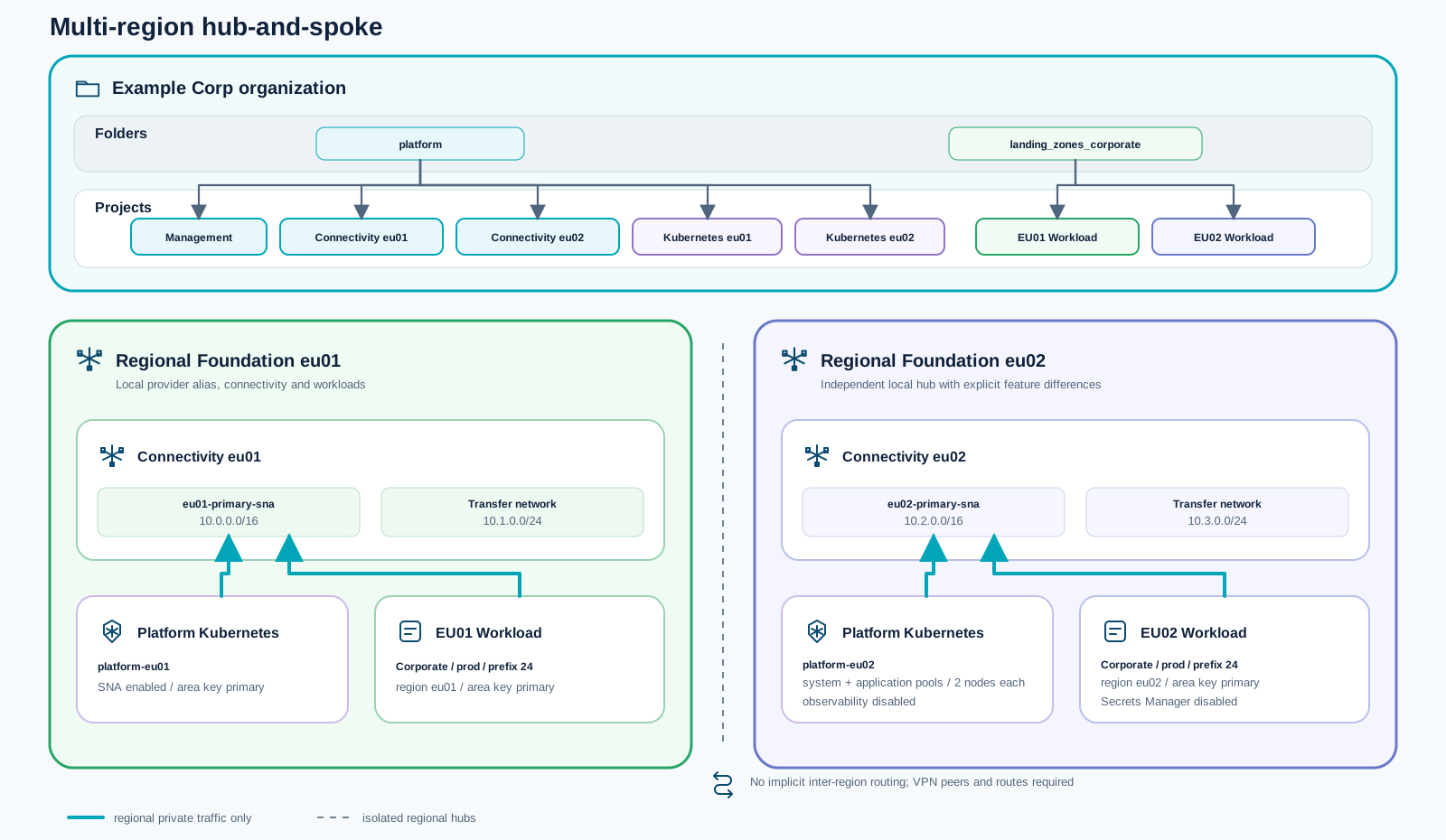
Use hub-and-spoke-multi-region.tfvars for regional foundations in eu01 and eu02. Each region
receives an independent hub, Network Area, workload landing zone, and optional platform Kubernetes
cluster. Inter-region connectivity is deliberately not created and must be designed explicitly.
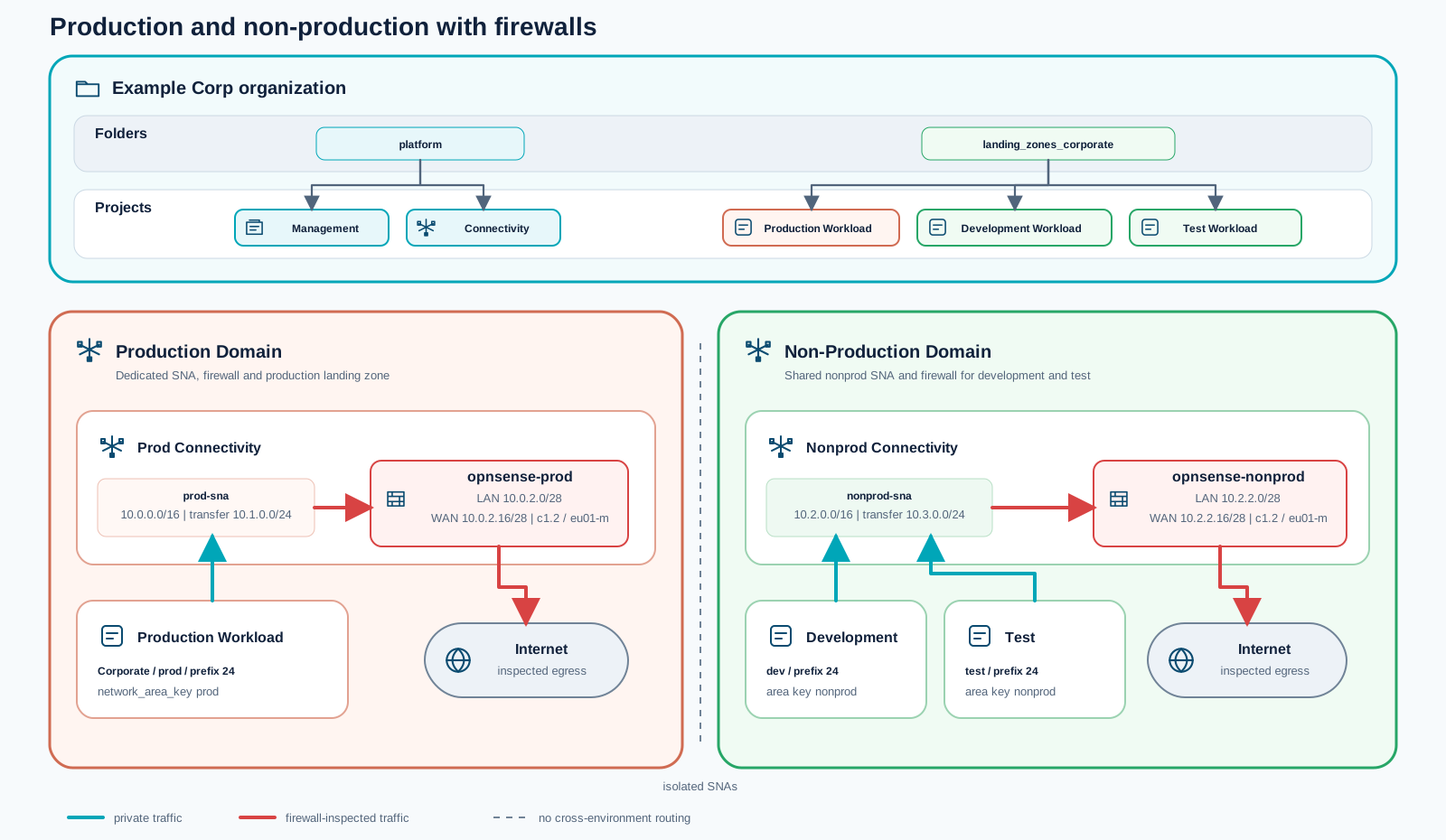
Use hub-and-spoke-prod-nonprod-firewall.tfvars when production must be isolated from
non-production. Each domain receives a dedicated Network Area and OPNsense firewall; development
and test share the non-production domain while remaining separate landing zones.
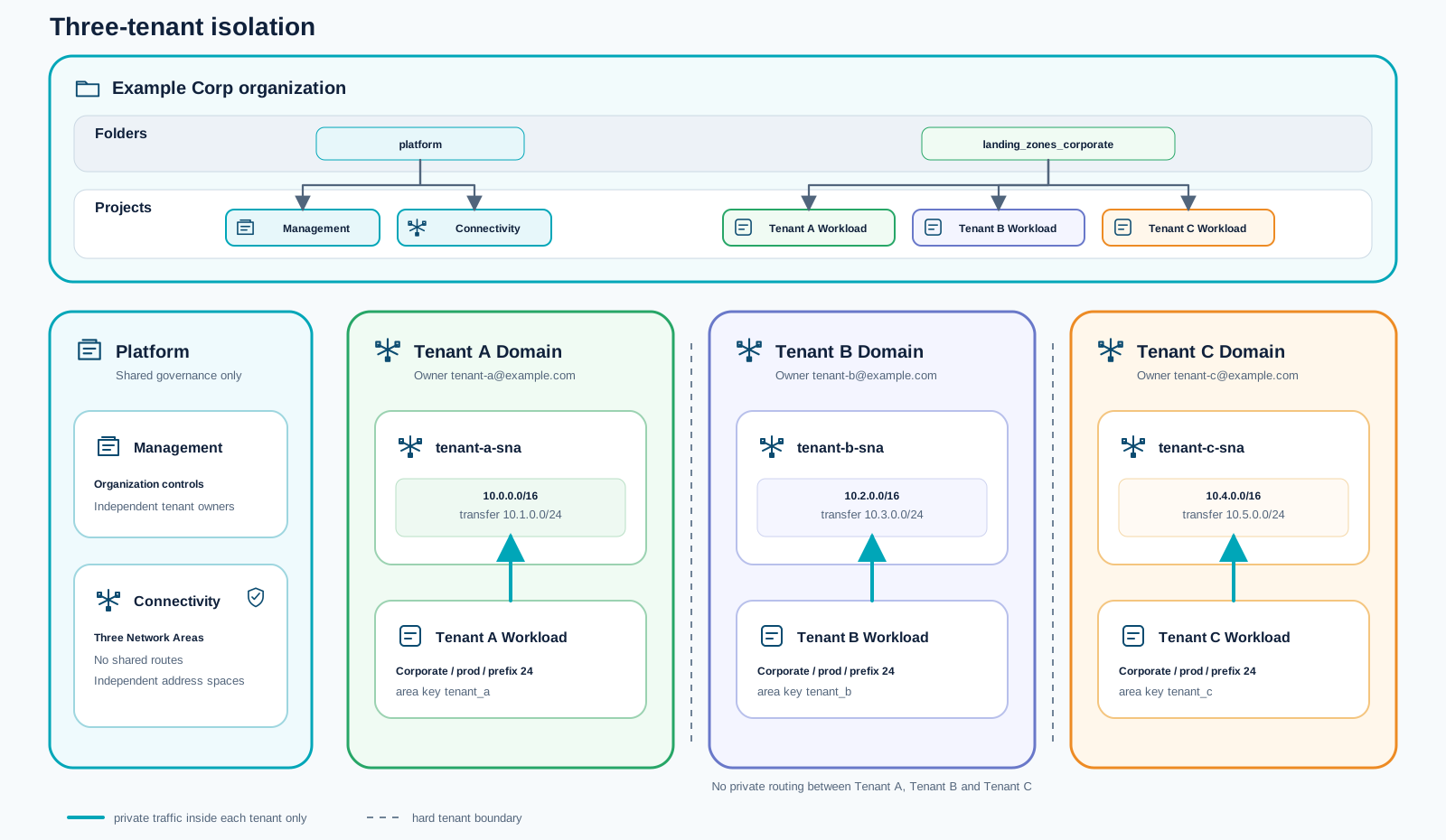
Use hub-and-spoke-tenant-isolation.tfvars for multiple tenants inside one organization. Every
tenant receives an independent owner, address plan, Network Area, connectivity project, and
workload landing zone, without private routing to the other tenant domains.
src/modules/governance)Purpose:
platform, landing_zones_corporate, landing_zones_public, sandboxes).Landing-zone classification:
src/modules/management)Purpose:
Landing-zone classification:
src/modules/connectivity)Purpose:
Landing-zone classification:
src/modules/devops)Purpose:
Landing-zone classification:
src/modules/landing-zone)Purpose:
for_each).Landing-zone classification:
src/modules/sandboxes)Purpose:
sandboxes folder.Landing-zone classification:
The current implementation now includes an end-to-end path for a central Kubernetes platform and namespace-based application onboarding.
The platform scope now includes a dedicated central Kubernetes foundation that can be operated as a shared platform service.
Application landing zones can now consume namespace service from the central Kubernetes platform cluster.
governancemanagementconnectivitydevopslanding-zone (core ALZ provisioning)sandboxes (supporting ALZ-adjacent environments)This means the repository delivers a strong platform baseline first, while ALZ capabilities are intentionally focused on project landing-zone provisioning and team sandbox enablement.
landing-zone map in your variable files.
This asset provides a reusable foundation for implementing a STACKIT platform landing zone. It is designed for enterprise environments that need a structured baseline for governance, security, networking, cost controls, and automation.
Repository:
This repository is a single root-module accelerator with modular submodules.
src/main.tf orchestrates all platform and landing-zone building blocks.src/config/.The repository provides eight reference configurations in src/config/. Choose the simplest
topology that satisfies the required network, security, organizational, tenant, and regional
boundaries.
Use standalone.tfvars for the smallest foundation: governance, management, a sandbox, and a
public application landing zone with its own network and direct internet access. It creates no
shared Network Area or connectivity hub, making it suitable when workloads do not require private
east-west connectivity or central DNS.
Use hub-and-spoke.tfvars when corporate workloads need shared private connectivity. A central
connectivity project provides the Network Area and DNS, the corporate data platform joins that
private domain, and public workloads retain independent networks with direct internet access.
Use hub-and-spoke-firewall.tfvars when corporate egress needs a consistent inspection and control
point. It extends the shared Network Area with an OPNsense firewall and steers corporate default
routes through the appliance, while public landing zones remain directly connected.
Use hub-and-spoke-finance-research.tfvars when business units require independent ownership and
private connectivity. Finance and research each receive their own address plan, connectivity
project, Network Area, and workload landing zone within the same STACKIT organization.
Use hub-and-spoke-multi-area.tfvars when regulated and shared workloads must occupy separate
private connectivity domains. Each domain has its own Network Area and DNS zone, with no implicit
routing between them.
Use hub-and-spoke-multi-region.tfvars for regional foundations in eu01 and eu02. Each region
receives an independent hub, Network Area, workload landing zone, and optional platform Kubernetes
cluster. Inter-region connectivity is deliberately not created and must be designed explicitly.
Use hub-and-spoke-prod-nonprod-firewall.tfvars when production must be isolated from
non-production. Each domain receives a dedicated Network Area and OPNsense firewall; development
and test share the non-production domain while remaining separate landing zones.
Use hub-and-spoke-tenant-isolation.tfvars for multiple tenants inside one organization. Every
tenant receives an independent owner, address plan, Network Area, connectivity project, and
workload landing zone, without private routing to the other tenant domains.
src/modules/governance)Purpose:
platform, landing_zones_corporate, landing_zones_public, sandboxes).Landing-zone classification:
src/modules/management)Purpose:
Landing-zone classification:
src/modules/connectivity)Purpose:
Landing-zone classification:
src/modules/devops)Purpose:
Landing-zone classification:
src/modules/landing-zone)Purpose:
for_each).Landing-zone classification:
src/modules/sandboxes)Purpose:
sandboxes folder.Landing-zone classification:
The current implementation now includes an end-to-end path for a central Kubernetes platform and namespace-based application onboarding.
The platform scope now includes a dedicated central Kubernetes foundation that can be operated as a shared platform service.
Application landing zones can now consume namespace service from the central Kubernetes platform cluster.
governancemanagementconnectivitydevopslanding-zone (core ALZ provisioning)sandboxes (supporting ALZ-adjacent environments)This means the repository delivers a strong platform baseline first, while ALZ capabilities are intentionally focused on project landing-zone provisioning and team sandbox enablement.
landing-zone map in your variable files.
This asset provides a reusable foundation for implementing a STACKIT platform landing zone. It is designed for enterprise environments that need a structured baseline for governance, security, networking, cost controls, and automation.
Repository:
This repository is a single root-module accelerator with modular submodules.
src/main.tf orchestrates all platform and landing-zone building blocks.src/config/.The repository provides eight reference configurations in src/config/. Choose the simplest
topology that satisfies the required network, security, organizational, tenant, and regional
boundaries.
Use standalone.tfvars for the smallest foundation: governance, management, a sandbox, and a
public application landing zone with its own network and direct internet access. It creates no
shared Network Area or connectivity hub, making it suitable when workloads do not require private
east-west connectivity or central DNS.
Use hub-and-spoke.tfvars when corporate workloads need shared private connectivity. A central
connectivity project provides the Network Area and DNS, the corporate data platform joins that
private domain, and public workloads retain independent networks with direct internet access.
Use hub-and-spoke-firewall.tfvars when corporate egress needs a consistent inspection and control
point. It extends the shared Network Area with an OPNsense firewall and steers corporate default
routes through the appliance, while public landing zones remain directly connected.
Use hub-and-spoke-finance-research.tfvars when business units require independent ownership and
private connectivity. Finance and research each receive their own address plan, connectivity
project, Network Area, and workload landing zone within the same STACKIT organization.
Use hub-and-spoke-multi-area.tfvars when regulated and shared workloads must occupy separate
private connectivity domains. Each domain has its own Network Area and DNS zone, with no implicit
routing between them.
Use hub-and-spoke-multi-region.tfvars for regional foundations in eu01 and eu02. Each region
receives an independent hub, Network Area, workload landing zone, and optional platform Kubernetes
cluster. Inter-region connectivity is deliberately not created and must be designed explicitly.
Use hub-and-spoke-prod-nonprod-firewall.tfvars when production must be isolated from
non-production. Each domain receives a dedicated Network Area and OPNsense firewall; development
and test share the non-production domain while remaining separate landing zones.
Use hub-and-spoke-tenant-isolation.tfvars for multiple tenants inside one organization. Every
tenant receives an independent owner, address plan, Network Area, connectivity project, and
workload landing zone, without private routing to the other tenant domains.
src/modules/governance)Purpose:
platform, landing_zones_corporate, landing_zones_public, sandboxes).Landing-zone classification:
src/modules/management)Purpose:
Landing-zone classification:
src/modules/connectivity)Purpose:
Landing-zone classification:
src/modules/devops)Purpose:
Landing-zone classification:
src/modules/landing-zone)Purpose:
for_each).Landing-zone classification:
src/modules/sandboxes)Purpose:
sandboxes folder.Landing-zone classification:
The current implementation now includes an end-to-end path for a central Kubernetes platform and namespace-based application onboarding.
The platform scope now includes a dedicated central Kubernetes foundation that can be operated as a shared platform service.
Application landing zones can now consume namespace service from the central Kubernetes platform cluster.
governancemanagementconnectivitydevopslanding-zone (core ALZ provisioning)sandboxes (supporting ALZ-adjacent environments)This means the repository delivers a strong platform baseline first, while ALZ capabilities are intentionally focused on project landing-zone provisioning and team sandbox enablement.
landing-zone map in your variable files.
This asset provides a reusable foundation for implementing a STACKIT platform landing zone. It is designed for enterprise environments that need a structured baseline for governance, security, networking, cost controls, and automation.
Repository:
This repository is a single root-module accelerator with modular submodules.
src/main.tf orchestrates all platform and landing-zone building blocks.src/config/.The repository provides eight reference configurations in src/config/. Choose the simplest
topology that satisfies the required network, security, organizational, tenant, and regional
boundaries.
Use standalone.tfvars for the smallest foundation: governance, management, a sandbox, and a
public application landing zone with its own network and direct internet access. It creates no
shared Network Area or connectivity hub, making it suitable when workloads do not require private
east-west connectivity or central DNS.
Use hub-and-spoke.tfvars when corporate workloads need shared private connectivity. A central
connectivity project provides the Network Area and DNS, the corporate data platform joins that
private domain, and public workloads retain independent networks with direct internet access.
Use hub-and-spoke-firewall.tfvars when corporate egress needs a consistent inspection and control
point. It extends the shared Network Area with an OPNsense firewall and steers corporate default
routes through the appliance, while public landing zones remain directly connected.
Use hub-and-spoke-finance-research.tfvars when business units require independent ownership and
private connectivity. Finance and research each receive their own address plan, connectivity
project, Network Area, and workload landing zone within the same STACKIT organization.
Use hub-and-spoke-multi-area.tfvars when regulated and shared workloads must occupy separate
private connectivity domains. Each domain has its own Network Area and DNS zone, with no implicit
routing between them.
Use hub-and-spoke-multi-region.tfvars for regional foundations in eu01 and eu02. Each region
receives an independent hub, Network Area, workload landing zone, and optional platform Kubernetes
cluster. Inter-region connectivity is deliberately not created and must be designed explicitly.
Use hub-and-spoke-prod-nonprod-firewall.tfvars when production must be isolated from
non-production. Each domain receives a dedicated Network Area and OPNsense firewall; development
and test share the non-production domain while remaining separate landing zones.
Use hub-and-spoke-tenant-isolation.tfvars for multiple tenants inside one organization. Every
tenant receives an independent owner, address plan, Network Area, connectivity project, and
workload landing zone, without private routing to the other tenant domains.
src/modules/governance)Purpose:
platform, landing_zones_corporate, landing_zones_public, sandboxes).Landing-zone classification:
src/modules/management)Purpose:
Landing-zone classification:
src/modules/connectivity)Purpose:
Landing-zone classification:
src/modules/devops)Purpose:
Landing-zone classification:
src/modules/landing-zone)Purpose:
for_each).Landing-zone classification:
src/modules/sandboxes)Purpose:
sandboxes folder.Landing-zone classification:
The current implementation now includes an end-to-end path for a central Kubernetes platform and namespace-based application onboarding.
The platform scope now includes a dedicated central Kubernetes foundation that can be operated as a shared platform service.
Application landing zones can now consume namespace service from the central Kubernetes platform cluster.
governancemanagementconnectivitydevopslanding-zone (core ALZ provisioning)sandboxes (supporting ALZ-adjacent environments)This means the repository delivers a strong platform baseline first, while ALZ capabilities are intentionally focused on project landing-zone provisioning and team sandbox enablement.
landing-zone map in your variable files.
This asset provides a reusable foundation for implementing a STACKIT platform landing zone. It is designed for enterprise environments that need a structured baseline for governance, security, networking, cost controls, and automation.
Repository:
This repository is a single root-module accelerator with modular submodules.
src/main.tf orchestrates all platform and landing-zone building blocks.src/config/.The repository provides eight reference configurations in src/config/. Choose the simplest
topology that satisfies the required network, security, organizational, tenant, and regional
boundaries.
Use standalone.tfvars for the smallest foundation: governance, management, a sandbox, and a
public application landing zone with its own network and direct internet access. It creates no
shared Network Area or connectivity hub, making it suitable when workloads do not require private
east-west connectivity or central DNS.
Use hub-and-spoke.tfvars when corporate workloads need shared private connectivity. A central
connectivity project provides the Network Area and DNS, the corporate data platform joins that
private domain, and public workloads retain independent networks with direct internet access.
Use hub-and-spoke-firewall.tfvars when corporate egress needs a consistent inspection and control
point. It extends the shared Network Area with an OPNsense firewall and steers corporate default
routes through the appliance, while public landing zones remain directly connected.
Use hub-and-spoke-finance-research.tfvars when business units require independent ownership and
private connectivity. Finance and research each receive their own address plan, connectivity
project, Network Area, and workload landing zone within the same STACKIT organization.
Use hub-and-spoke-multi-area.tfvars when regulated and shared workloads must occupy separate
private connectivity domains. Each domain has its own Network Area and DNS zone, with no implicit
routing between them.
Use hub-and-spoke-multi-region.tfvars for regional foundations in eu01 and eu02. Each region
receives an independent hub, Network Area, workload landing zone, and optional platform Kubernetes
cluster. Inter-region connectivity is deliberately not created and must be designed explicitly.
Use hub-and-spoke-prod-nonprod-firewall.tfvars when production must be isolated from
non-production. Each domain receives a dedicated Network Area and OPNsense firewall; development
and test share the non-production domain while remaining separate landing zones.
Use hub-and-spoke-tenant-isolation.tfvars for multiple tenants inside one organization. Every
tenant receives an independent owner, address plan, Network Area, connectivity project, and
workload landing zone, without private routing to the other tenant domains.
src/modules/governance)Purpose:
platform, landing_zones_corporate, landing_zones_public, sandboxes).Landing-zone classification:
src/modules/management)Purpose:
Landing-zone classification:
src/modules/connectivity)Purpose:
Landing-zone classification:
src/modules/devops)Purpose:
Landing-zone classification:
src/modules/landing-zone)Purpose:
for_each).Landing-zone classification:
src/modules/sandboxes)Purpose:
sandboxes folder.Landing-zone classification:
The current implementation now includes an end-to-end path for a central Kubernetes platform and namespace-based application onboarding.
The platform scope now includes a dedicated central Kubernetes foundation that can be operated as a shared platform service.
Application landing zones can now consume namespace service from the central Kubernetes platform cluster.
governancemanagementconnectivitydevopslanding-zone (core ALZ provisioning)sandboxes (supporting ALZ-adjacent environments)This means the repository delivers a strong platform baseline first, while ALZ capabilities are intentionally focused on project landing-zone provisioning and team sandbox enablement.
landing-zone map in your variable files.
This asset provides a reusable foundation for implementing a STACKIT platform landing zone. It is designed for enterprise environments that need a structured baseline for governance, security, networking, cost controls, and automation.
Repository:
This repository is a single root-module accelerator with modular submodules.
src/main.tf orchestrates all platform and landing-zone building blocks.src/config/.The repository provides eight reference configurations in src/config/. Choose the simplest
topology that satisfies the required network, security, organizational, tenant, and regional
boundaries.
Use standalone.tfvars for the smallest foundation: governance, management, a sandbox, and a
public application landing zone with its own network and direct internet access. It creates no
shared Network Area or connectivity hub, making it suitable when workloads do not require private
east-west connectivity or central DNS.
Use hub-and-spoke.tfvars when corporate workloads need shared private connectivity. A central
connectivity project provides the Network Area and DNS, the corporate data platform joins that
private domain, and public workloads retain independent networks with direct internet access.
Use hub-and-spoke-firewall.tfvars when corporate egress needs a consistent inspection and control
point. It extends the shared Network Area with an OPNsense firewall and steers corporate default
routes through the appliance, while public landing zones remain directly connected.
Use hub-and-spoke-finance-research.tfvars when business units require independent ownership and
private connectivity. Finance and research each receive their own address plan, connectivity
project, Network Area, and workload landing zone within the same STACKIT organization.
Use hub-and-spoke-multi-area.tfvars when regulated and shared workloads must occupy separate
private connectivity domains. Each domain has its own Network Area and DNS zone, with no implicit
routing between them.
Use hub-and-spoke-multi-region.tfvars for regional foundations in eu01 and eu02. Each region
receives an independent hub, Network Area, workload landing zone, and optional platform Kubernetes
cluster. Inter-region connectivity is deliberately not created and must be designed explicitly.
Use hub-and-spoke-prod-nonprod-firewall.tfvars when production must be isolated from
non-production. Each domain receives a dedicated Network Area and OPNsense firewall; development
and test share the non-production domain while remaining separate landing zones.
Use hub-and-spoke-tenant-isolation.tfvars for multiple tenants inside one organization. Every
tenant receives an independent owner, address plan, Network Area, connectivity project, and
workload landing zone, without private routing to the other tenant domains.
src/modules/governance)Purpose:
platform, landing_zones_corporate, landing_zones_public, sandboxes).Landing-zone classification:
src/modules/management)Purpose:
Landing-zone classification:
src/modules/connectivity)Purpose:
Landing-zone classification:
src/modules/devops)Purpose:
Landing-zone classification:
src/modules/landing-zone)Purpose:
for_each).Landing-zone classification:
src/modules/sandboxes)Purpose:
sandboxes folder.Landing-zone classification:
The current implementation now includes an end-to-end path for a central Kubernetes platform and namespace-based application onboarding.
The platform scope now includes a dedicated central Kubernetes foundation that can be operated as a shared platform service.
Application landing zones can now consume namespace service from the central Kubernetes platform cluster.
governancemanagementconnectivitydevopslanding-zone (core ALZ provisioning)sandboxes (supporting ALZ-adjacent environments)This means the repository delivers a strong platform baseline first, while ALZ capabilities are intentionally focused on project landing-zone provisioning and team sandbox enablement.
landing-zone map in your variable files.
This asset provides a reusable foundation for implementing a STACKIT platform landing zone. It is designed for enterprise environments that need a structured baseline for governance, security, networking, cost controls, and automation.
Repository:
This repository is a single root-module accelerator with modular submodules.
src/main.tf orchestrates all platform and landing-zone building blocks.src/config/.The repository provides eight reference configurations in src/config/. Choose the simplest
topology that satisfies the required network, security, organizational, tenant, and regional
boundaries.
Use standalone.tfvars for the smallest foundation: governance, management, a sandbox, and a
public application landing zone with its own network and direct internet access. It creates no
shared Network Area or connectivity hub, making it suitable when workloads do not require private
east-west connectivity or central DNS.
Use hub-and-spoke.tfvars when corporate workloads need shared private connectivity. A central
connectivity project provides the Network Area and DNS, the corporate data platform joins that
private domain, and public workloads retain independent networks with direct internet access.
Use hub-and-spoke-firewall.tfvars when corporate egress needs a consistent inspection and control
point. It extends the shared Network Area with an OPNsense firewall and steers corporate default
routes through the appliance, while public landing zones remain directly connected.
Use hub-and-spoke-finance-research.tfvars when business units require independent ownership and
private connectivity. Finance and research each receive their own address plan, connectivity
project, Network Area, and workload landing zone within the same STACKIT organization.
Use hub-and-spoke-multi-area.tfvars when regulated and shared workloads must occupy separate
private connectivity domains. Each domain has its own Network Area and DNS zone, with no implicit
routing between them.
Use hub-and-spoke-multi-region.tfvars for regional foundations in eu01 and eu02. Each region
receives an independent hub, Network Area, workload landing zone, and optional platform Kubernetes
cluster. Inter-region connectivity is deliberately not created and must be designed explicitly.
Use hub-and-spoke-prod-nonprod-firewall.tfvars when production must be isolated from
non-production. Each domain receives a dedicated Network Area and OPNsense firewall; development
and test share the non-production domain while remaining separate landing zones.
Use hub-and-spoke-tenant-isolation.tfvars for multiple tenants inside one organization. Every
tenant receives an independent owner, address plan, Network Area, connectivity project, and
workload landing zone, without private routing to the other tenant domains.
src/modules/governance)Purpose:
platform, landing_zones_corporate, landing_zones_public, sandboxes).Landing-zone classification:
src/modules/management)Purpose:
Landing-zone classification:
src/modules/connectivity)Purpose:
Landing-zone classification:
src/modules/devops)Purpose:
Landing-zone classification:
src/modules/landing-zone)Purpose:
for_each).Landing-zone classification:
src/modules/sandboxes)Purpose:
sandboxes folder.Landing-zone classification:
The current implementation now includes an end-to-end path for a central Kubernetes platform and namespace-based application onboarding.
The platform scope now includes a dedicated central Kubernetes foundation that can be operated as a shared platform service.
Application landing zones can now consume namespace service from the central Kubernetes platform cluster.
governancemanagementconnectivitydevopslanding-zone (core ALZ provisioning)sandboxes (supporting ALZ-adjacent environments)This means the repository delivers a strong platform baseline first, while ALZ capabilities are intentionally focused on project landing-zone provisioning and team sandbox enablement.
landing-zone map in your variable files.Choose the smallest accelerator topology when workloads need independent networks and direct internet access without shared private connectivity.
Introduce a central connectivity project, shared Network Area, and DNS when corporate workloads need private east-west communication.
Extend hub-and-spoke with an OPNsense firewall when corporate traffic requires a consistent inspection point and controlled egress path.
Give finance and research independent ownership, address plans, connectivity projects, and private workload domains inside one organization.
Create distinct Network Areas and DNS zones when regulated and shared workloads must have no implicit private routing between them.
Deploy isolated foundations in eu01 and eu02 when regional workloads need their own connectivity, landing-zone, and platform boundaries.
Use separate Network Areas and firewalls when production requires a stronger boundary while development and test can share a non-production domain.
Create independent ownership, address plans, and private connectivity domains when multiple tenants share the organization but must not route to one another.
This asset provides a reusable foundation for implementing a STACKIT platform landing zone. It is designed for enterprise environments that need a structured baseline for governance, security, networking, cost controls, and automation.
Repository:
This repository is a single root-module accelerator with modular submodules.
src/main.tf orchestrates all platform and landing-zone building blocks.src/config/.The repository provides eight reference configurations in src/config/. Choose the simplest
topology that satisfies the required network, security, organizational, tenant, and regional
boundaries.
Use standalone.tfvars for the smallest foundation: governance, management, a sandbox, and a
public application landing zone with its own network and direct internet access. It creates no
shared Network Area or connectivity hub, making it suitable when workloads do not require private
east-west connectivity or central DNS.
Use hub-and-spoke.tfvars when corporate workloads need shared private connectivity. A central
connectivity project provides the Network Area and DNS, the corporate data platform joins that
private domain, and public workloads retain independent networks with direct internet access.
Use hub-and-spoke-firewall.tfvars when corporate egress needs a consistent inspection and control
point. It extends the shared Network Area with an OPNsense firewall and steers corporate default
routes through the appliance, while public landing zones remain directly connected.
Use hub-and-spoke-finance-research.tfvars when business units require independent ownership and
private connectivity. Finance and research each receive their own address plan, connectivity
project, Network Area, and workload landing zone within the same STACKIT organization.
Use hub-and-spoke-multi-area.tfvars when regulated and shared workloads must occupy separate
private connectivity domains. Each domain has its own Network Area and DNS zone, with no implicit
routing between them.
Use hub-and-spoke-multi-region.tfvars for regional foundations in eu01 and eu02. Each region
receives an independent hub, Network Area, workload landing zone, and optional platform Kubernetes
cluster. Inter-region connectivity is deliberately not created and must be designed explicitly.
Use hub-and-spoke-prod-nonprod-firewall.tfvars when production must be isolated from
non-production. Each domain receives a dedicated Network Area and OPNsense firewall; development
and test share the non-production domain while remaining separate landing zones.
Use hub-and-spoke-tenant-isolation.tfvars for multiple tenants inside one organization. Every
tenant receives an independent owner, address plan, Network Area, connectivity project, and
workload landing zone, without private routing to the other tenant domains.
src/modules/governance)Purpose:
platform, landing_zones_corporate, landing_zones_public, sandboxes).Landing-zone classification:
src/modules/management)Purpose:
Landing-zone classification:
src/modules/connectivity)Purpose:
Landing-zone classification:
src/modules/devops)Purpose:
Landing-zone classification:
src/modules/landing-zone)Purpose:
for_each).Landing-zone classification:
src/modules/sandboxes)Purpose:
sandboxes folder.Landing-zone classification:
The current implementation now includes an end-to-end path for a central Kubernetes platform and namespace-based application onboarding.
The platform scope now includes a dedicated central Kubernetes foundation that can be operated as a shared platform service.
Application landing zones can now consume namespace service from the central Kubernetes platform cluster.
governancemanagementconnectivitydevopslanding-zone (core ALZ provisioning)sandboxes (supporting ALZ-adjacent environments)This means the repository delivers a strong platform baseline first, while ALZ capabilities are intentionally focused on project landing-zone provisioning and team sandbox enablement.
landing-zone map in your variable files.
This asset provides a reusable foundation for implementing a STACKIT platform landing zone. It is designed for enterprise environments that need a structured baseline for governance, security, networking, cost controls, and automation.
Repository:
This repository is a single root-module accelerator with modular submodules.
src/main.tf orchestrates all platform and landing-zone building blocks.src/config/.The repository provides eight reference configurations in src/config/. Choose the simplest
topology that satisfies the required network, security, organizational, tenant, and regional
boundaries.
Use standalone.tfvars for the smallest foundation: governance, management, a sandbox, and a
public application landing zone with its own network and direct internet access. It creates no
shared Network Area or connectivity hub, making it suitable when workloads do not require private
east-west connectivity or central DNS.
Use hub-and-spoke.tfvars when corporate workloads need shared private connectivity. A central
connectivity project provides the Network Area and DNS, the corporate data platform joins that
private domain, and public workloads retain independent networks with direct internet access.
Use hub-and-spoke-firewall.tfvars when corporate egress needs a consistent inspection and control
point. It extends the shared Network Area with an OPNsense firewall and steers corporate default
routes through the appliance, while public landing zones remain directly connected.
Use hub-and-spoke-finance-research.tfvars when business units require independent ownership and
private connectivity. Finance and research each receive their own address plan, connectivity
project, Network Area, and workload landing zone within the same STACKIT organization.
Use hub-and-spoke-multi-area.tfvars when regulated and shared workloads must occupy separate
private connectivity domains. Each domain has its own Network Area and DNS zone, with no implicit
routing between them.
Use hub-and-spoke-multi-region.tfvars for regional foundations in eu01 and eu02. Each region
receives an independent hub, Network Area, workload landing zone, and optional platform Kubernetes
cluster. Inter-region connectivity is deliberately not created and must be designed explicitly.
Use hub-and-spoke-prod-nonprod-firewall.tfvars when production must be isolated from
non-production. Each domain receives a dedicated Network Area and OPNsense firewall; development
and test share the non-production domain while remaining separate landing zones.
Use hub-and-spoke-tenant-isolation.tfvars for multiple tenants inside one organization. Every
tenant receives an independent owner, address plan, Network Area, connectivity project, and
workload landing zone, without private routing to the other tenant domains.
src/modules/governance)Purpose:
platform, landing_zones_corporate, landing_zones_public, sandboxes).Landing-zone classification:
src/modules/management)Purpose:
Landing-zone classification:
src/modules/connectivity)Purpose:
Landing-zone classification:
src/modules/devops)Purpose:
Landing-zone classification:
src/modules/landing-zone)Purpose:
for_each).Landing-zone classification:
src/modules/sandboxes)Purpose:
sandboxes folder.Landing-zone classification:
The current implementation now includes an end-to-end path for a central Kubernetes platform and namespace-based application onboarding.
The platform scope now includes a dedicated central Kubernetes foundation that can be operated as a shared platform service.
Application landing zones can now consume namespace service from the central Kubernetes platform cluster.
governancemanagementconnectivitydevopslanding-zone (core ALZ provisioning)sandboxes (supporting ALZ-adjacent environments)This means the repository delivers a strong platform baseline first, while ALZ capabilities are intentionally focused on project landing-zone provisioning and team sandbox enablement.
landing-zone map in your variable files.
This asset provides a reusable foundation for implementing a STACKIT platform landing zone. It is designed for enterprise environments that need a structured baseline for governance, security, networking, cost controls, and automation.
Repository:
This repository is a single root-module accelerator with modular submodules.
src/main.tf orchestrates all platform and landing-zone building blocks.src/config/.The repository provides eight reference configurations in src/config/. Choose the simplest
topology that satisfies the required network, security, organizational, tenant, and regional
boundaries.
Use standalone.tfvars for the smallest foundation: governance, management, a sandbox, and a
public application landing zone with its own network and direct internet access. It creates no
shared Network Area or connectivity hub, making it suitable when workloads do not require private
east-west connectivity or central DNS.
Use hub-and-spoke.tfvars when corporate workloads need shared private connectivity. A central
connectivity project provides the Network Area and DNS, the corporate data platform joins that
private domain, and public workloads retain independent networks with direct internet access.
Use hub-and-spoke-firewall.tfvars when corporate egress needs a consistent inspection and control
point. It extends the shared Network Area with an OPNsense firewall and steers corporate default
routes through the appliance, while public landing zones remain directly connected.
Use hub-and-spoke-finance-research.tfvars when business units require independent ownership and
private connectivity. Finance and research each receive their own address plan, connectivity
project, Network Area, and workload landing zone within the same STACKIT organization.
Use hub-and-spoke-multi-area.tfvars when regulated and shared workloads must occupy separate
private connectivity domains. Each domain has its own Network Area and DNS zone, with no implicit
routing between them.
Use hub-and-spoke-multi-region.tfvars for regional foundations in eu01 and eu02. Each region
receives an independent hub, Network Area, workload landing zone, and optional platform Kubernetes
cluster. Inter-region connectivity is deliberately not created and must be designed explicitly.
Use hub-and-spoke-prod-nonprod-firewall.tfvars when production must be isolated from
non-production. Each domain receives a dedicated Network Area and OPNsense firewall; development
and test share the non-production domain while remaining separate landing zones.
Use hub-and-spoke-tenant-isolation.tfvars for multiple tenants inside one organization. Every
tenant receives an independent owner, address plan, Network Area, connectivity project, and
workload landing zone, without private routing to the other tenant domains.
src/modules/governance)Purpose:
platform, landing_zones_corporate, landing_zones_public, sandboxes).Landing-zone classification:
src/modules/management)Purpose:
Landing-zone classification:
src/modules/connectivity)Purpose:
Landing-zone classification:
src/modules/devops)Purpose:
Landing-zone classification:
src/modules/landing-zone)Purpose:
for_each).Landing-zone classification:
src/modules/sandboxes)Purpose:
sandboxes folder.Landing-zone classification:
The current implementation now includes an end-to-end path for a central Kubernetes platform and namespace-based application onboarding.
The platform scope now includes a dedicated central Kubernetes foundation that can be operated as a shared platform service.
Application landing zones can now consume namespace service from the central Kubernetes platform cluster.
governancemanagementconnectivitydevopslanding-zone (core ALZ provisioning)sandboxes (supporting ALZ-adjacent environments)This means the repository delivers a strong platform baseline first, while ALZ capabilities are intentionally focused on project landing-zone provisioning and team sandbox enablement.
landing-zone map in your variable files.
This asset provides a reusable foundation for implementing a STACKIT platform landing zone. It is designed for enterprise environments that need a structured baseline for governance, security, networking, cost controls, and automation.
Repository:
This repository is a single root-module accelerator with modular submodules.
src/main.tf orchestrates all platform and landing-zone building blocks.src/config/.The repository provides eight reference configurations in src/config/. Choose the simplest
topology that satisfies the required network, security, organizational, tenant, and regional
boundaries.
Use standalone.tfvars for the smallest foundation: governance, management, a sandbox, and a
public application landing zone with its own network and direct internet access. It creates no
shared Network Area or connectivity hub, making it suitable when workloads do not require private
east-west connectivity or central DNS.
Use hub-and-spoke.tfvars when corporate workloads need shared private connectivity. A central
connectivity project provides the Network Area and DNS, the corporate data platform joins that
private domain, and public workloads retain independent networks with direct internet access.
Use hub-and-spoke-firewall.tfvars when corporate egress needs a consistent inspection and control
point. It extends the shared Network Area with an OPNsense firewall and steers corporate default
routes through the appliance, while public landing zones remain directly connected.
Use hub-and-spoke-finance-research.tfvars when business units require independent ownership and
private connectivity. Finance and research each receive their own address plan, connectivity
project, Network Area, and workload landing zone within the same STACKIT organization.
Use hub-and-spoke-multi-area.tfvars when regulated and shared workloads must occupy separate
private connectivity domains. Each domain has its own Network Area and DNS zone, with no implicit
routing between them.
Use hub-and-spoke-multi-region.tfvars for regional foundations in eu01 and eu02. Each region
receives an independent hub, Network Area, workload landing zone, and optional platform Kubernetes
cluster. Inter-region connectivity is deliberately not created and must be designed explicitly.
Use hub-and-spoke-prod-nonprod-firewall.tfvars when production must be isolated from
non-production. Each domain receives a dedicated Network Area and OPNsense firewall; development
and test share the non-production domain while remaining separate landing zones.
Use hub-and-spoke-tenant-isolation.tfvars for multiple tenants inside one organization. Every
tenant receives an independent owner, address plan, Network Area, connectivity project, and
workload landing zone, without private routing to the other tenant domains.
src/modules/governance)Purpose:
platform, landing_zones_corporate, landing_zones_public, sandboxes).Landing-zone classification:
src/modules/management)Purpose:
Landing-zone classification:
src/modules/connectivity)Purpose:
Landing-zone classification:
src/modules/devops)Purpose:
Landing-zone classification:
src/modules/landing-zone)Purpose:
for_each).Landing-zone classification:
src/modules/sandboxes)Purpose:
sandboxes folder.Landing-zone classification:
The current implementation now includes an end-to-end path for a central Kubernetes platform and namespace-based application onboarding.
The platform scope now includes a dedicated central Kubernetes foundation that can be operated as a shared platform service.
Application landing zones can now consume namespace service from the central Kubernetes platform cluster.
governancemanagementconnectivitydevopslanding-zone (core ALZ provisioning)sandboxes (supporting ALZ-adjacent environments)This means the repository delivers a strong platform baseline first, while ALZ capabilities are intentionally focused on project landing-zone provisioning and team sandbox enablement.
landing-zone map in your variable files.
This asset provides a reusable foundation for implementing a STACKIT platform landing zone. It is designed for enterprise environments that need a structured baseline for governance, security, networking, cost controls, and automation.
Repository:
This repository is a single root-module accelerator with modular submodules.
src/main.tf orchestrates all platform and landing-zone building blocks.src/config/.The repository provides eight reference configurations in src/config/. Choose the simplest
topology that satisfies the required network, security, organizational, tenant, and regional
boundaries.
Use standalone.tfvars for the smallest foundation: governance, management, a sandbox, and a
public application landing zone with its own network and direct internet access. It creates no
shared Network Area or connectivity hub, making it suitable when workloads do not require private
east-west connectivity or central DNS.
Use hub-and-spoke.tfvars when corporate workloads need shared private connectivity. A central
connectivity project provides the Network Area and DNS, the corporate data platform joins that
private domain, and public workloads retain independent networks with direct internet access.
Use hub-and-spoke-firewall.tfvars when corporate egress needs a consistent inspection and control
point. It extends the shared Network Area with an OPNsense firewall and steers corporate default
routes through the appliance, while public landing zones remain directly connected.
Use hub-and-spoke-finance-research.tfvars when business units require independent ownership and
private connectivity. Finance and research each receive their own address plan, connectivity
project, Network Area, and workload landing zone within the same STACKIT organization.
Use hub-and-spoke-multi-area.tfvars when regulated and shared workloads must occupy separate
private connectivity domains. Each domain has its own Network Area and DNS zone, with no implicit
routing between them.
Use hub-and-spoke-multi-region.tfvars for regional foundations in eu01 and eu02. Each region
receives an independent hub, Network Area, workload landing zone, and optional platform Kubernetes
cluster. Inter-region connectivity is deliberately not created and must be designed explicitly.
Use hub-and-spoke-prod-nonprod-firewall.tfvars when production must be isolated from
non-production. Each domain receives a dedicated Network Area and OPNsense firewall; development
and test share the non-production domain while remaining separate landing zones.
Use hub-and-spoke-tenant-isolation.tfvars for multiple tenants inside one organization. Every
tenant receives an independent owner, address plan, Network Area, connectivity project, and
workload landing zone, without private routing to the other tenant domains.
src/modules/governance)Purpose:
platform, landing_zones_corporate, landing_zones_public, sandboxes).Landing-zone classification:
src/modules/management)Purpose:
Landing-zone classification:
src/modules/connectivity)Purpose:
Landing-zone classification:
src/modules/devops)Purpose:
Landing-zone classification:
src/modules/landing-zone)Purpose:
for_each).Landing-zone classification:
src/modules/sandboxes)Purpose:
sandboxes folder.Landing-zone classification:
The current implementation now includes an end-to-end path for a central Kubernetes platform and namespace-based application onboarding.
The platform scope now includes a dedicated central Kubernetes foundation that can be operated as a shared platform service.
Application landing zones can now consume namespace service from the central Kubernetes platform cluster.
governancemanagementconnectivitydevopslanding-zone (core ALZ provisioning)sandboxes (supporting ALZ-adjacent environments)This means the repository delivers a strong platform baseline first, while ALZ capabilities are intentionally focused on project landing-zone provisioning and team sandbox enablement.
landing-zone map in your variable files.
This asset provides a reusable foundation for implementing a STACKIT platform landing zone. It is designed for enterprise environments that need a structured baseline for governance, security, networking, cost controls, and automation.
Repository:
This repository is a single root-module accelerator with modular submodules.
src/main.tf orchestrates all platform and landing-zone building blocks.src/config/.The repository provides eight reference configurations in src/config/. Choose the simplest
topology that satisfies the required network, security, organizational, tenant, and regional
boundaries.
Use standalone.tfvars for the smallest foundation: governance, management, a sandbox, and a
public application landing zone with its own network and direct internet access. It creates no
shared Network Area or connectivity hub, making it suitable when workloads do not require private
east-west connectivity or central DNS.
Use hub-and-spoke.tfvars when corporate workloads need shared private connectivity. A central
connectivity project provides the Network Area and DNS, the corporate data platform joins that
private domain, and public workloads retain independent networks with direct internet access.
Use hub-and-spoke-firewall.tfvars when corporate egress needs a consistent inspection and control
point. It extends the shared Network Area with an OPNsense firewall and steers corporate default
routes through the appliance, while public landing zones remain directly connected.
Use hub-and-spoke-finance-research.tfvars when business units require independent ownership and
private connectivity. Finance and research each receive their own address plan, connectivity
project, Network Area, and workload landing zone within the same STACKIT organization.
Use hub-and-spoke-multi-area.tfvars when regulated and shared workloads must occupy separate
private connectivity domains. Each domain has its own Network Area and DNS zone, with no implicit
routing between them.
Use hub-and-spoke-multi-region.tfvars for regional foundations in eu01 and eu02. Each region
receives an independent hub, Network Area, workload landing zone, and optional platform Kubernetes
cluster. Inter-region connectivity is deliberately not created and must be designed explicitly.
Use hub-and-spoke-prod-nonprod-firewall.tfvars when production must be isolated from
non-production. Each domain receives a dedicated Network Area and OPNsense firewall; development
and test share the non-production domain while remaining separate landing zones.
Use hub-and-spoke-tenant-isolation.tfvars for multiple tenants inside one organization. Every
tenant receives an independent owner, address plan, Network Area, connectivity project, and
workload landing zone, without private routing to the other tenant domains.
src/modules/governance)Purpose:
platform, landing_zones_corporate, landing_zones_public, sandboxes).Landing-zone classification:
src/modules/management)Purpose:
Landing-zone classification:
src/modules/connectivity)Purpose:
Landing-zone classification:
src/modules/devops)Purpose:
Landing-zone classification:
src/modules/landing-zone)Purpose:
for_each).Landing-zone classification:
src/modules/sandboxes)Purpose:
sandboxes folder.Landing-zone classification:
The current implementation now includes an end-to-end path for a central Kubernetes platform and namespace-based application onboarding.
The platform scope now includes a dedicated central Kubernetes foundation that can be operated as a shared platform service.
Application landing zones can now consume namespace service from the central Kubernetes platform cluster.
governancemanagementconnectivitydevopslanding-zone (core ALZ provisioning)sandboxes (supporting ALZ-adjacent environments)This means the repository delivers a strong platform baseline first, while ALZ capabilities are intentionally focused on project landing-zone provisioning and team sandbox enablement.
landing-zone map in your variable files.
This asset provides a reusable foundation for implementing a STACKIT platform landing zone. It is designed for enterprise environments that need a structured baseline for governance, security, networking, cost controls, and automation.
Repository:
This repository is a single root-module accelerator with modular submodules.
src/main.tf orchestrates all platform and landing-zone building blocks.src/config/.The repository provides eight reference configurations in src/config/. Choose the simplest
topology that satisfies the required network, security, organizational, tenant, and regional
boundaries.
Use standalone.tfvars for the smallest foundation: governance, management, a sandbox, and a
public application landing zone with its own network and direct internet access. It creates no
shared Network Area or connectivity hub, making it suitable when workloads do not require private
east-west connectivity or central DNS.
Use hub-and-spoke.tfvars when corporate workloads need shared private connectivity. A central
connectivity project provides the Network Area and DNS, the corporate data platform joins that
private domain, and public workloads retain independent networks with direct internet access.
Use hub-and-spoke-firewall.tfvars when corporate egress needs a consistent inspection and control
point. It extends the shared Network Area with an OPNsense firewall and steers corporate default
routes through the appliance, while public landing zones remain directly connected.
Use hub-and-spoke-finance-research.tfvars when business units require independent ownership and
private connectivity. Finance and research each receive their own address plan, connectivity
project, Network Area, and workload landing zone within the same STACKIT organization.
Use hub-and-spoke-multi-area.tfvars when regulated and shared workloads must occupy separate
private connectivity domains. Each domain has its own Network Area and DNS zone, with no implicit
routing between them.
Use hub-and-spoke-multi-region.tfvars for regional foundations in eu01 and eu02. Each region
receives an independent hub, Network Area, workload landing zone, and optional platform Kubernetes
cluster. Inter-region connectivity is deliberately not created and must be designed explicitly.
Use hub-and-spoke-prod-nonprod-firewall.tfvars when production must be isolated from
non-production. Each domain receives a dedicated Network Area and OPNsense firewall; development
and test share the non-production domain while remaining separate landing zones.
Use hub-and-spoke-tenant-isolation.tfvars for multiple tenants inside one organization. Every
tenant receives an independent owner, address plan, Network Area, connectivity project, and
workload landing zone, without private routing to the other tenant domains.
src/modules/governance)Purpose:
platform, landing_zones_corporate, landing_zones_public, sandboxes).Landing-zone classification:
src/modules/management)Purpose:
Landing-zone classification:
src/modules/connectivity)Purpose:
Landing-zone classification:
src/modules/devops)Purpose:
Landing-zone classification:
src/modules/landing-zone)Purpose:
for_each).Landing-zone classification:
src/modules/sandboxes)Purpose:
sandboxes folder.Landing-zone classification:
The current implementation now includes an end-to-end path for a central Kubernetes platform and namespace-based application onboarding.
The platform scope now includes a dedicated central Kubernetes foundation that can be operated as a shared platform service.
Application landing zones can now consume namespace service from the central Kubernetes platform cluster.
governancemanagementconnectivitydevopslanding-zone (core ALZ provisioning)sandboxes (supporting ALZ-adjacent environments)This means the repository delivers a strong platform baseline first, while ALZ capabilities are intentionally focused on project landing-zone provisioning and team sandbox enablement.
landing-zone map in your variable files.STACKIT
The sovereign European cloud provider behind the framework, delivering IaaS and PaaS from German and Austrian data centers with full digital independence.
This managed asset builds on the STACKIT landing zone foundation and adds structured advisory, setup support, and implementation guidance as a service.
It supports organizations that need both technical accelerators and delivery governance to establish a production-ready cloud baseline.
Terragrunt, and boilerplate patterns.Typical engagements run in close collaboration with platform, security, and application stakeholders. The service can be delivered as a focused setup initiative or integrated into a broader migration factory program.
This managed asset builds on the STACKIT landing zone foundation and adds structured advisory, setup support, and implementation guidance as a service.
It supports organizations that need both technical accelerators and delivery governance to establish a production-ready cloud baseline.
Terragrunt, and boilerplate patterns.Typical engagements run in close collaboration with platform, security, and application stakeholders. The service can be delivered as a focused setup initiative or integrated into a broader migration factory program.
This managed asset builds on the STACKIT landing zone foundation and adds structured advisory, setup support, and implementation guidance as a service.
It supports organizations that need both technical accelerators and delivery governance to establish a production-ready cloud baseline.
Terragrunt, and boilerplate patterns.Typical engagements run in close collaboration with platform, security, and application stakeholders. The service can be delivered as a focused setup initiative or integrated into a broader migration factory program.
This managed asset builds on the STACKIT landing zone foundation and adds structured advisory, setup support, and implementation guidance as a service.
It supports organizations that need both technical accelerators and delivery governance to establish a production-ready cloud baseline.
Terragrunt, and boilerplate patterns.Typical engagements run in close collaboration with platform, security, and application stakeholders. The service can be delivered as a focused setup initiative or integrated into a broader migration factory program.
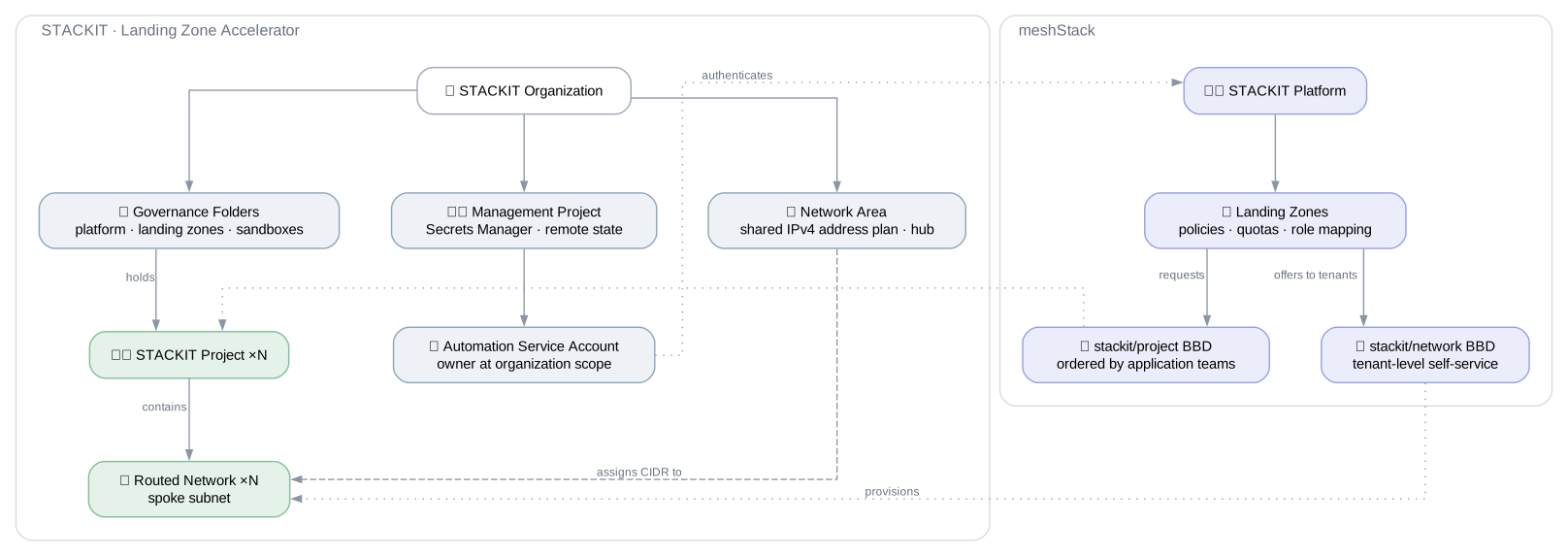
The STACKIT Landing Zone Accelerator provisions the platform baseline as code. This reference architecture adds the layer above it: meshStack registers the STACKIT platform, its landing zones and a set of building block definitions, so application teams order STACKIT projects and routed networks themselves instead of filing a ticket with the platform team.
It is implemented as OpenTofu in the meshStack Hub and deployed once per workspace.
The Accelerator’s management module creates an automation service account, assigns it owner at organization scope, and stores its key in Secrets Manager.
That is exactly the credential this reference architecture needs: it takes one STACKIT service account key with resource-manager.admin on the organization.
So the two run together as one stack — deploy the Accelerator, read the automation key from Secrets Manager, and hand it to the meshStack landing zone.
STACKIT Project platform is registered in meshStack together with its landing zones, wired to the service account that creates projects.stackit/project building block definition that application teams order to get a STACKIT project, with meshStack roles mapped to STACKIT project roles.stackit/network building block. Each order draws its subnet from the shared plan, so two teams cannot collide on CIDR ranges.STACKIT Project Starterkit definition that composes the two building blocks above into one order. It is always registered, and the landing zones it offers are the ones the deployment actually created.Leaving the network configuration unset deploys the sandbox foundation only, which is the smallest useful starting point.
| Responsibility | Platform Team | Application Team |
|---|---|---|
| Provision the STACKIT platform baseline with the Accelerator | ✅ | ❌ |
| Register the platform, landing zones and building block definitions | ✅ | ❌ |
| Choose the shared address plan (when networking is enabled) | ✅ | ❌ |
| Request STACKIT projects through a landing zone | ❌ | ✅ |
| Order routed networks inside their own projects | ❌ | ✅ |
| Operate the workloads inside their projects | ❌ | ✅ |
The STACKIT Landing Zone Accelerator provisions the platform baseline as code. This reference architecture adds the layer above it: meshStack registers the STACKIT platform, its landing zones and a set of building block definitions, so application teams order STACKIT projects and routed networks themselves instead of filing a ticket with the platform team.
It is implemented as OpenTofu in the meshStack Hub and deployed once per workspace.
The Accelerator’s management module creates an automation service account, assigns it owner at organization scope, and stores its key in Secrets Manager.
That is exactly the credential this reference architecture needs: it takes one STACKIT service account key with resource-manager.admin on the organization.
So the two run together as one stack — deploy the Accelerator, read the automation key from Secrets Manager, and hand it to the meshStack landing zone.
STACKIT Project platform is registered in meshStack together with its landing zones, wired to the service account that creates projects.stackit/project building block definition that application teams order to get a STACKIT project, with meshStack roles mapped to STACKIT project roles.stackit/network building block. Each order draws its subnet from the shared plan, so two teams cannot collide on CIDR ranges.STACKIT Project Starterkit definition that composes the two building blocks above into one order. It is always registered, and the landing zones it offers are the ones the deployment actually created.Leaving the network configuration unset deploys the sandbox foundation only, which is the smallest useful starting point.
| Responsibility | Platform Team | Application Team |
|---|---|---|
| Provision the STACKIT platform baseline with the Accelerator | ✅ | ❌ |
| Register the platform, landing zones and building block definitions | ✅ | ❌ |
| Choose the shared address plan (when networking is enabled) | ✅ | ❌ |
| Request STACKIT projects through a landing zone | ❌ | ✅ |
| Order routed networks inside their own projects | ❌ | ✅ |
| Operate the workloads inside their projects | ❌ | ✅ |
The STACKIT Landing Zone Accelerator provisions the platform baseline as code. This reference architecture adds the layer above it: meshStack registers the STACKIT platform, its landing zones and a set of building block definitions, so application teams order STACKIT projects and routed networks themselves instead of filing a ticket with the platform team.
It is implemented as OpenTofu in the meshStack Hub and deployed once per workspace.
The Accelerator’s management module creates an automation service account, assigns it owner at organization scope, and stores its key in Secrets Manager.
That is exactly the credential this reference architecture needs: it takes one STACKIT service account key with resource-manager.admin on the organization.
So the two run together as one stack — deploy the Accelerator, read the automation key from Secrets Manager, and hand it to the meshStack landing zone.
STACKIT Project platform is registered in meshStack together with its landing zones, wired to the service account that creates projects.stackit/project building block definition that application teams order to get a STACKIT project, with meshStack roles mapped to STACKIT project roles.stackit/network building block. Each order draws its subnet from the shared plan, so two teams cannot collide on CIDR ranges.STACKIT Project Starterkit definition that composes the two building blocks above into one order. It is always registered, and the landing zones it offers are the ones the deployment actually created.Leaving the network configuration unset deploys the sandbox foundation only, which is the smallest useful starting point.
| Responsibility | Platform Team | Application Team |
|---|---|---|
| Provision the STACKIT platform baseline with the Accelerator | ✅ | ❌ |
| Register the platform, landing zones and building block definitions | ✅ | ❌ |
| Choose the shared address plan (when networking is enabled) | ✅ | ❌ |
| Request STACKIT projects through a landing zone | ❌ | ✅ |
| Order routed networks inside their own projects | ❌ | ✅ |
| Operate the workloads inside their projects | ❌ | ✅ |
The STACKIT Landing Zone Accelerator provisions the platform baseline as code. This reference architecture adds the layer above it: meshStack registers the STACKIT platform, its landing zones and a set of building block definitions, so application teams order STACKIT projects and routed networks themselves instead of filing a ticket with the platform team.
It is implemented as OpenTofu in the meshStack Hub and deployed once per workspace.
The Accelerator’s management module creates an automation service account, assigns it owner at organization scope, and stores its key in Secrets Manager.
That is exactly the credential this reference architecture needs: it takes one STACKIT service account key with resource-manager.admin on the organization.
So the two run together as one stack — deploy the Accelerator, read the automation key from Secrets Manager, and hand it to the meshStack landing zone.
STACKIT Project platform is registered in meshStack together with its landing zones, wired to the service account that creates projects.stackit/project building block definition that application teams order to get a STACKIT project, with meshStack roles mapped to STACKIT project roles.stackit/network building block. Each order draws its subnet from the shared plan, so two teams cannot collide on CIDR ranges.STACKIT Project Starterkit definition that composes the two building blocks above into one order. It is always registered, and the landing zones it offers are the ones the deployment actually created.Leaving the network configuration unset deploys the sandbox foundation only, which is the smallest useful starting point.
| Responsibility | Platform Team | Application Team |
|---|---|---|
| Provision the STACKIT platform baseline with the Accelerator | ✅ | ❌ |
| Register the platform, landing zones and building block definitions | ✅ | ❌ |
| Choose the shared address plan (when networking is enabled) | ✅ | ❌ |
| Request STACKIT projects through a landing zone | ❌ | ✅ |
| Order routed networks inside their own projects | ❌ | ✅ |
| Operate the workloads inside their projects | ❌ | ✅ |
The STACKIT Landing Zone Accelerator provisions the platform baseline as code. This reference architecture adds the layer above it: meshStack registers the STACKIT platform, its landing zones and a set of building block definitions, so application teams order STACKIT projects and routed networks themselves instead of filing a ticket with the platform team.
It is implemented as OpenTofu in the meshStack Hub and deployed once per workspace.
The Accelerator’s management module creates an automation service account, assigns it owner at organization scope, and stores its key in Secrets Manager.
That is exactly the credential this reference architecture needs: it takes one STACKIT service account key with resource-manager.admin on the organization.
So the two run together as one stack — deploy the Accelerator, read the automation key from Secrets Manager, and hand it to the meshStack landing zone.
STACKIT Project platform is registered in meshStack together with its landing zones, wired to the service account that creates projects.stackit/project building block definition that application teams order to get a STACKIT project, with meshStack roles mapped to STACKIT project roles.stackit/network building block. Each order draws its subnet from the shared plan, so two teams cannot collide on CIDR ranges.STACKIT Project Starterkit definition that composes the two building blocks above into one order. It is always registered, and the landing zones it offers are the ones the deployment actually created.Leaving the network configuration unset deploys the sandbox foundation only, which is the smallest useful starting point.
| Responsibility | Platform Team | Application Team |
|---|---|---|
| Provision the STACKIT platform baseline with the Accelerator | ✅ | ❌ |
| Register the platform, landing zones and building block definitions | ✅ | ❌ |
| Choose the shared address plan (when networking is enabled) | ✅ | ❌ |
| Request STACKIT projects through a landing zone | ❌ | ✅ |
| Order routed networks inside their own projects | ❌ | ✅ |
| Operate the workloads inside their projects | ❌ | ✅ |
Lukas WeberrußHead of STACKIT Cloud Migration Framework · STACKITOwnerActive 10 of the last 12 weeks · 47 updateswww.linkedin.com/in/lukas-weberruß-a360b081Lukas WeberrußHead of STACKIT Cloud Migration Framework · STACKITOwnerActive 10 of the last 12 weeks · 47 updatesSTACKITwww.linkedin.com/in/lukas-weberruß-a360b081TMTobias M.Head of STACKIT Cloud Framework · STACKITOwnerActive 12 of the last 12 weeks · 168 updatesSTACKITwww.linkedin.com/in/tobias-müller-011304172Contributed in STACKITLukas WeberrußLukas WeberrußHead of STACKIT Cloud Migration Framework · STACKITOwnerActive 10 of the last 12 weeks · 47 updatesSTACKITwww.linkedin.com/in/lukas-weberruß-a360b081
· Sep 24, 2026
Lukas WeberrußLukas WeberrußHead of STACKIT Cloud Migration Framework · STACKITOwnerActive 10 of the last 12 weeks · 47 updatesSTACKITwww.linkedin.com/in/lukas-weberruß-a360b081
· Sep 24, 2026
Lukas WeberrußLukas WeberrußHead of STACKIT Cloud Migration Framework · STACKITOwnerActive 10 of the last 12 weeks · 47 updatesSTACKITwww.linkedin.com/in/lukas-weberruß-a360b081
· Sep 15, 2026
Lukas WeberrußLukas WeberrußHead of STACKIT Cloud Migration Framework · STACKITOwnerActive 10 of the last 12 weeks · 47 updatesSTACKITwww.linkedin.com/in/lukas-weberruß-a360b081
· Sep 11, 2026
Tobias M.Tobias M.Head of STACKIT Cloud Framework · STACKITOwnerActive 12 of the last 12 weeks · 168 updatesSTACKITwww.linkedin.com/in/tobias-müller-011304172
· Aug 26, 2026
Lukas WeberrußLukas WeberrußHead of STACKIT Cloud Migration Framework · STACKITOwnerActive 10 of the last 12 weeks · 47 updatesSTACKITwww.linkedin.com/in/lukas-weberruß-a360b081
· Aug 25, 2026
Lukas WeberrußLukas WeberrußHead of STACKIT Cloud Migration Framework · STACKITOwnerActive 10 of the last 12 weeks · 47 updatesSTACKITwww.linkedin.com/in/lukas-weberruß-a360b081
· Aug 24, 2026
Tobias M.Tobias M.Head of STACKIT Cloud Framework · STACKITOwnerActive 12 of the last 12 weeks · 168 updatesSTACKITwww.linkedin.com/in/tobias-müller-011304172
· Aug 19, 2026
Lukas WeberrußLukas WeberrußHead of STACKIT Cloud Migration Framework · STACKITOwnerActive 10 of the last 12 weeks · 47 updatesSTACKITwww.linkedin.com/in/lukas-weberruß-a360b081
· Aug 11, 2026
Tobias M.Tobias M.Head of STACKIT Cloud Framework · STACKITOwnerActive 12 of the last 12 weeks · 168 updatesSTACKITwww.linkedin.com/in/tobias-müller-011304172
· Aug 7, 2026
Lukas WeberrußLukas WeberrußHead of STACKIT Cloud Migration Framework · STACKITOwnerActive 10 of the last 12 weeks · 47 updatesSTACKITwww.linkedin.com/in/lukas-weberruß-a360b081
· Jul 24, 2026
Lukas WeberrußLukas WeberrußHead of STACKIT Cloud Migration Framework · STACKITOwnerActive 10 of the last 12 weeks · 47 updatesSTACKITwww.linkedin.com/in/lukas-weberruß-a360b081
· Jul 23, 2026
Lukas WeberrußLukas WeberrußHead of STACKIT Cloud Migration Framework · STACKITOwnerActive 10 of the last 12 weeks · 47 updatesSTACKITwww.linkedin.com/in/lukas-weberruß-a360b081
· Jul 21, 2026
Lukas WeberrußLukas WeberrußHead of STACKIT Cloud Migration Framework · STACKITOwnerActive 10 of the last 12 weeks · 47 updatesSTACKITwww.linkedin.com/in/lukas-weberruß-a360b081
· Jul 21, 2026
Lukas WeberrußLukas WeberrußHead of STACKIT Cloud Migration Framework · STACKITOwnerActive 10 of the last 12 weeks · 47 updatesSTACKITwww.linkedin.com/in/lukas-weberruß-a360b081
· Jul 20, 2026
Lukas WeberrußLukas WeberrußHead of STACKIT Cloud Migration Framework · STACKITOwnerActive 10 of the last 12 weeks · 47 updatesSTACKITwww.linkedin.com/in/lukas-weberruß-a360b081
· Jul 20, 2026
Lukas WeberrußLukas WeberrußHead of STACKIT Cloud Migration Framework · STACKITOwnerActive 10 of the last 12 weeks · 47 updatesSTACKITwww.linkedin.com/in/lukas-weberruß-a360b081
· Jul 20, 2026
Lukas WeberrußLukas WeberrußHead of STACKIT Cloud Migration Framework · STACKITOwnerActive 10 of the last 12 weeks · 47 updatesSTACKITwww.linkedin.com/in/lukas-weberruß-a360b081
· Jul 16, 2026
Tobias M.Tobias M.Head of STACKIT Cloud Framework · STACKITOwnerActive 12 of the last 12 weeks · 168 updatesSTACKITwww.linkedin.com/in/tobias-müller-011304172
· Jul 15, 2026
Lukas WeberrußLukas WeberrußHead of STACKIT Cloud Migration Framework · STACKITOwnerActive 10 of the last 12 weeks · 47 updatesSTACKITwww.linkedin.com/in/lukas-weberruß-a360b081
· Jul 13, 2026