_
_
Network architecture defines how workloads communicate securely, how traffic is segmented, and how central connectivity services are governed across shared and project-specific landing zones.
In most enterprise migrations, this topic is less about individual subnets and more about operating a controlled connectivity model over time: who connects which project, via which paths, and under which guardrails.
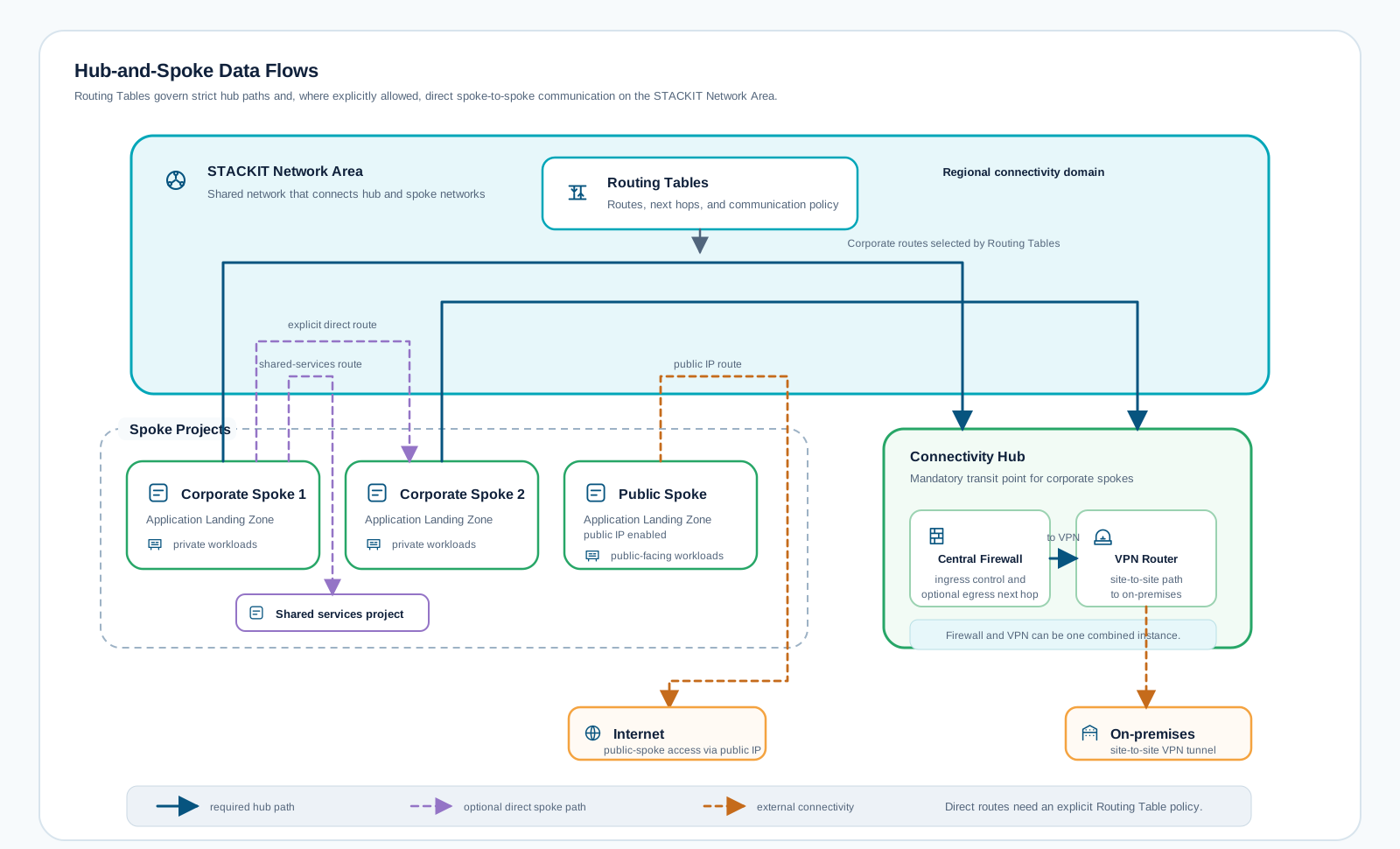
Confirm the product connectivity boundaries before choosing a topology. Network Area scope, route precedence, and VPN gateway behavior constrain the design; they do not replace the workload connectivity matrix or security approval.
The source shows pictures here that this page leaves out (1). See them in Concepts
The STACKIT Network Area (SNA) allows projects within an organization to be connected to each other on a network level. This makes it possible to connect various resources of the projects within an SNA and also simplifies the connection with on-prem environments (hybrid cloud).
An SNA project differs from a public project in the fact that it is connected to an internal transfer network. When creating a network in a SNA project, the address range is defined using the specified prefix length from the network ranges of the SNA. To make the connectivity within the SNA projects available, the project router gets connected to the SNA transfer network. When editing the networks of SNA projects, the routing table of all project routers is automatically adjusted, no manual adjustment is necessary. Access control at network level is carried out exclusively by security groups, all incoming traffic is denied by default.
SNA is a global resource which you need to enable for the regions you want to use it in. Currently traffic between regions is only possible via the public internet. Private connectivity between regions inside of an SNA is planned for the future.
Example topology of an SNA with 2 projects:
This section is copied from the STACKIT docs automatically, several times a day. It cannot be changed here. Changes belong in the STACKIT docs.
Routing tables consist of different types of routes serving different purposes and having a different priority in the overall routing context. Route types with a higher priority value are preferred over lower priority ones if they have the same prefix length. If routes of the same route type have the same prefix length, equal-cost-multi-path (ECMP) is performed.
| priority | route type | description |
|---|---|---|
| 4 | system routes | System routes are automatically generated routes for connectivity between projects inside an SNA. System routes are enabled by default for routing tables but can be disabled to manage traffic and isolation within a network environment. |
| 3 | service routes | Service routes are routes which are added by a STACKIT service to reach it. Service routes are always enabled and can’t be disabled/removed by the user directly. |
| 2 | static routes | Static routes are routes which are added by a user. They can have different next-hops such as an IP-address, black hole or the internet. |
| 1 | dynamic routes | Dynamic routes are routes which are learned through a dynamic routing protocol like BGP. Dynamic routes are enabled by default for routing tables but can be disabled. |
This section is copied from the STACKIT docs automatically, several times a day. It cannot be changed here. Changes belong in the STACKIT docs.
A Virtual Private Network (VPN) with STACKIT creates a secure, encrypted connection over the internet between your remote network and your STACKIT Network Area (SNA). This secure tunnel allows data to be transmitted safely, protecting it from eavesdropping, interception, or unauthorized access.
With STACKIT VPN, you can securely connect to your STACKIT Network Area, enabling access to its resources as if you were directly connected to the remote network. This capability is particularly useful for accessing services, applications, and data within the SNA from remote locations, ensuring both privacy and security in all communications.
A STACKIT VPN typically consists of two key components; the VPN gateway and the VPN connection:
STACKIT VPN is an essential tool for securely connecting distributed resources, enabling remote access to cloud-based services while maintaining the integrity and privacy of your data within the STACKIT cloud environment.
This section is copied from the STACKIT docs automatically, several times a day. It cannot be changed here. Changes belong in the STACKIT docs.

