Understand and use resistance
The six most common fears in cloud transformations — from job loss to compliance risk — and how to respond constructively to each rather than dismissing them.
Any IT department can implement technology. Developing an organisation so that it independently recognises and exploits cloud opportunities — that is the real transformation.
No cloud project fails because of missing technology. It fails because of people who do not want to, cannot, or are not permitted to use the technology. Resistance is not the problem — it is the signal that shows where change management is needed.
This chapter gives you the tools to shape cultural change systematically: from diagnosing typical fears, to activating leaders, to building a Cloud Champions network that carries transformation into the organisation at scale.
Understand and use resistance
The six most common fears in cloud transformations — from job loss to compliance risk — and how to respond constructively to each rather than dismissing them.
Leaders as catalysts
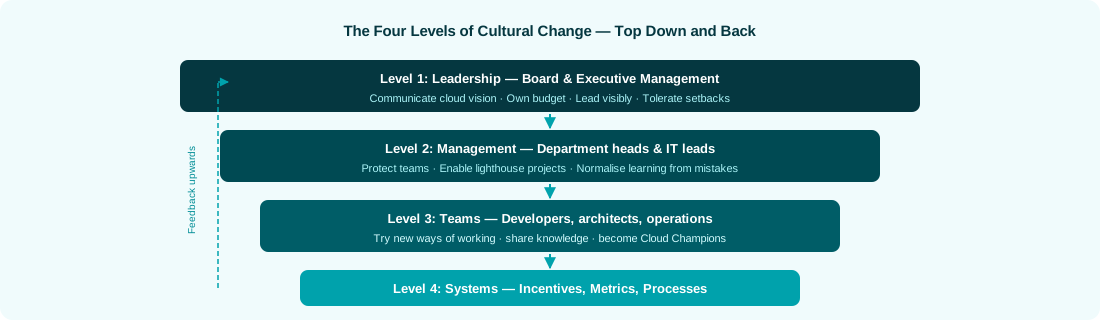
How leaders at four levels — from executive management to team leads — actively accelerate change rather than merely tolerating it.
Building Cloud Champions
A multiplier network of internal enthusiasts that carries change into teams faster and more credibly than any external consulting team.
Accompanying role development
How eight classic IT roles evolve in the cloud — and how to shape this evolution so that people gain security rather than lose it.
An insurance company with 4,000 employees migrated 22 workloads to a new cloud platform. No technical problem, no budget overrun. And yet: after 18 months only 4 of the 22 workloads were actively in production. The rest were not being used.
The subsequent review found: performance metrics for IT staff rewarded stability, not innovation. Middle management avoided cloud decisions because no one knew what happened when mistakes were made. Business units saw no reason to abandon their familiar tools.
Cultural change means: changing the conditions so that new behaviour is the rational choice for everyone involved.