Finding the Right People
Which seven roles a CCoE needs, how to choose between internal development, external recruitment and partner models — and what the most common staffing mistakes are.
A CCoE is not an IT department. It is the nervous system of your cloud transformation — and without it, technology remains a tool without direction.
The CCoE is the organisational answer to a fundamental question: who is responsible for ensuring that cloud transformation succeeds across the entire organisation — not just in IT infrastructure?
Without a CCoE, the typical result is isolated cloud initiatives in different departments, no shared standards, no pooled knowledge, and no central cost management. The transformation fragments before it gains momentum.
This chapter shows you how to build the CCoE as an enabler rather than a bottleneck — with a clear mandate, realistic staffing and a rollout that matches the size of your organisation.
Finding the Right People
Which seven roles a CCoE needs, how to choose between internal development, external recruitment and partner models — and what the most common staffing mistakes are.
Mandate and Charter
What the CCoE may and may not decide — and why a written charter with executive signatures is the difference between a real governing body and a recommendation committee.
Four-Phase Rollout
From the founding team in month 1 to federated scaling from month 18 — with concrete success signals and warning signs for each phase.
Federated Model
How centralisation and decentralisation stand in the right balance — so that the CCoE does not become a bottleneck, but uncontrolled local cloud islands do not emerge either.
The seven roles of the CCoE sound clear on paper. In practice they are hard to fill — because the required combination of technical depth, communication strength and strategic thinking is rarely found in one person.
What successful CCoE founders know: Choose the first three roles from people who enjoy internal trust and can inspire others. Technical knowledge can be built faster than internal credibility. A cloud enthusiast from the existing team who is respected by colleagues is worth more than an external certification holder who knows no one.
What fails: An e-commerce company staffed its CCoE with two people — both with cloud certifications, both without experience in internal change management. After six months there were 23 tickets in the backlog, no decision mandates and an executive team that viewed the CCoE as an IT cost centre. Investment: EUR 340,000. Outcome: project cancelled.
The decisive difference: mandate before headcount plan.
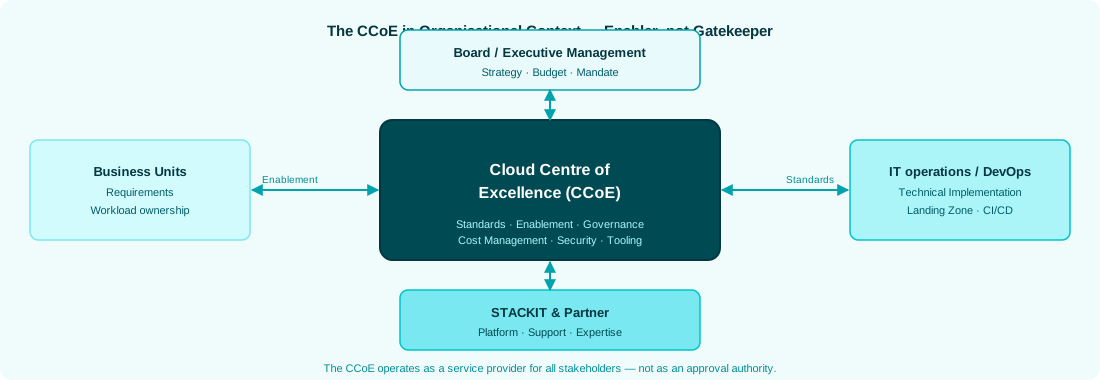
The CCoE operationally implements the Cloud Strategy and owns the Cloud Finance Management processes. It is the bridge between strategic board decisions and technical execution by IT operations.
Advisory/Adoption describes how to build and sustain the CCoE. The Migration Framework describes how the CCoE steers the migration factory once adoption is underway.