Managed Kubernetes Platform on STACKIT (PRODYNA)
PRODYNA
Last updated on


Guided PRODYNA journey to a managed Kubernetes platform on STACKIT: discovery, landing zone, management cluster, fleet, workloads, day-2, and handover.
PRODYNA
A consulting and engineering company for digital transformation delivery, from landing zones to application modernization.
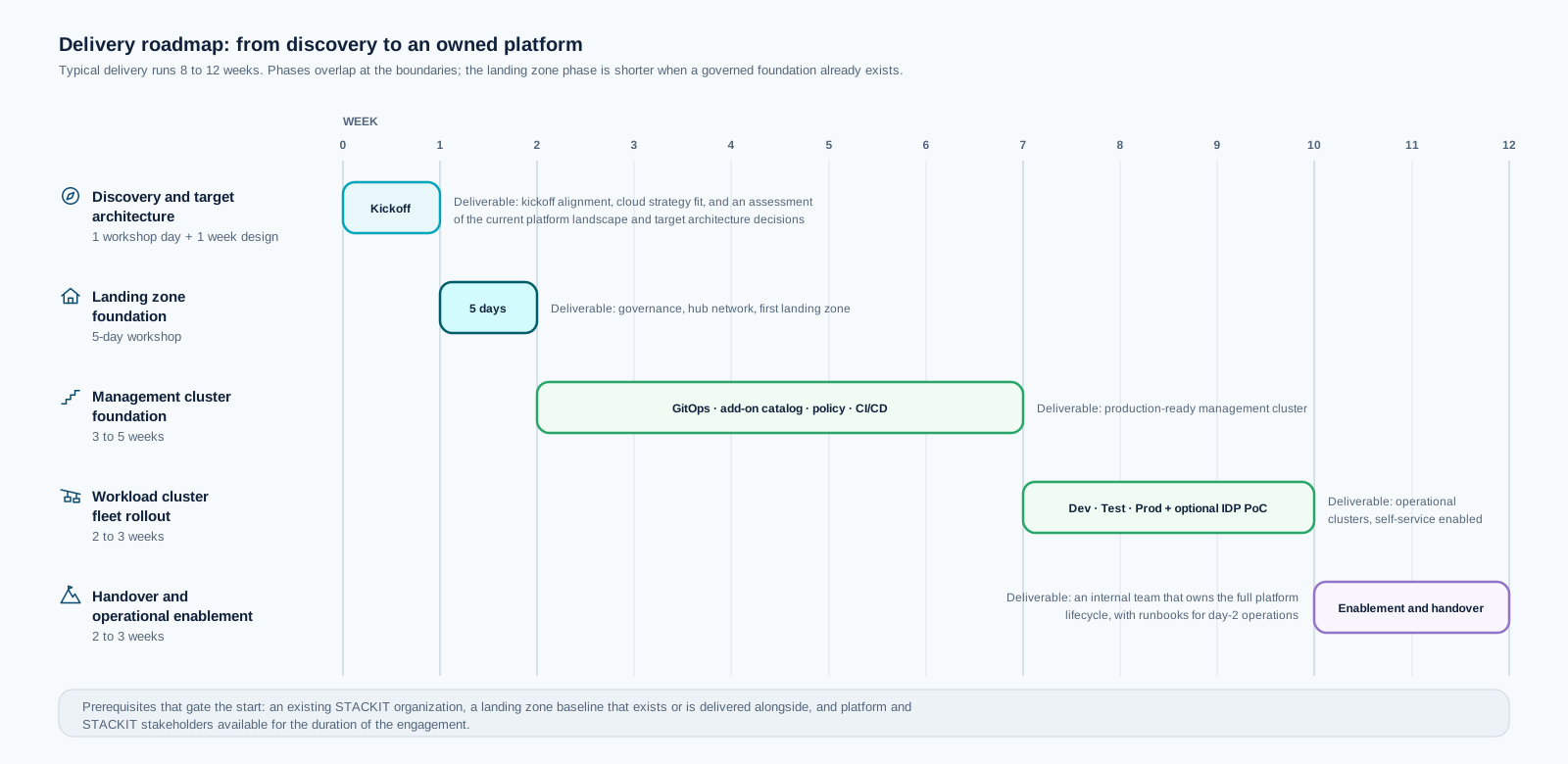
The Managed Kubernetes Platform on STACKIT is a PRODYNA service offer for establishing an enterprise-grade, multi-cluster container platform on sovereign STACKIT infrastructure.
The platform is built around a central management cluster that distributes add-ons, Helm charts, and standardized configuration fleet-wide, so every workload cluster inherits the same security, compliance, and operational baseline. Typical delivery runs 8 to 12 weeks and results in a production-ready platform plus a roadmap for further platform maturity and fleet expansion.
Organizations running containerized workloads across multiple teams and environments regularly hit the same wall: inconsistent cluster configuration, manual provisioning, thin governance, and growing security and compliance risk. Without a platform approach, operational complexity grows with every additional cluster.
A one-day discovery workshop with key stakeholders assesses the current infrastructure, workloads, and compliance requirements. Within the same week the target architecture and landing zone strategy are agreed.
Deliverable: Kickoff alignment, cloud strategy fit, and an assessment of the current platform landscape with the resulting target architecture decisions.
The management cluster is deployed into a landing zone project and serves as the central control plane for the fleet. Expect roughly three to four weeks for this phase.
Deliverable: Production-ready management cluster with CI/CD and governance tooling.
Initial workload clusters for Dev, Test, and Prod are provisioned, with add-ons and configuration synchronized from the management cluster. Expect roughly two to three weeks.
Deliverable: Operational workload clusters with developer self-service enabled.
The closing phase enables internal teams to operate the platform confidently. Expect roughly two to three weeks of knowledge transfer and handover.
Deliverable: Trained internal team capable of managing the full platform lifecycle.
PRODYNA
A consulting and engineering company for digital transformation delivery, from landing zones to application modernization.
The CAF Landing Zone - Foundation Accelerator is a PRODYNA service offer for establishing an enterprise-ready STACKIT foundation with CAF-aligned landing zones. The offer is designed as a focused 5-day workshop to deliver a first productive landing zone (MVP) with governance, network hub, hybrid connectivity, and predefined landing zones.
Reference:
This partner asset can be used alongside STACKIT-provided templates and managed offerings, depending on customer sourcing strategy and delivery model.
PRODYNA
A consulting and engineering company for digital transformation delivery, from landing zones to application modernization.
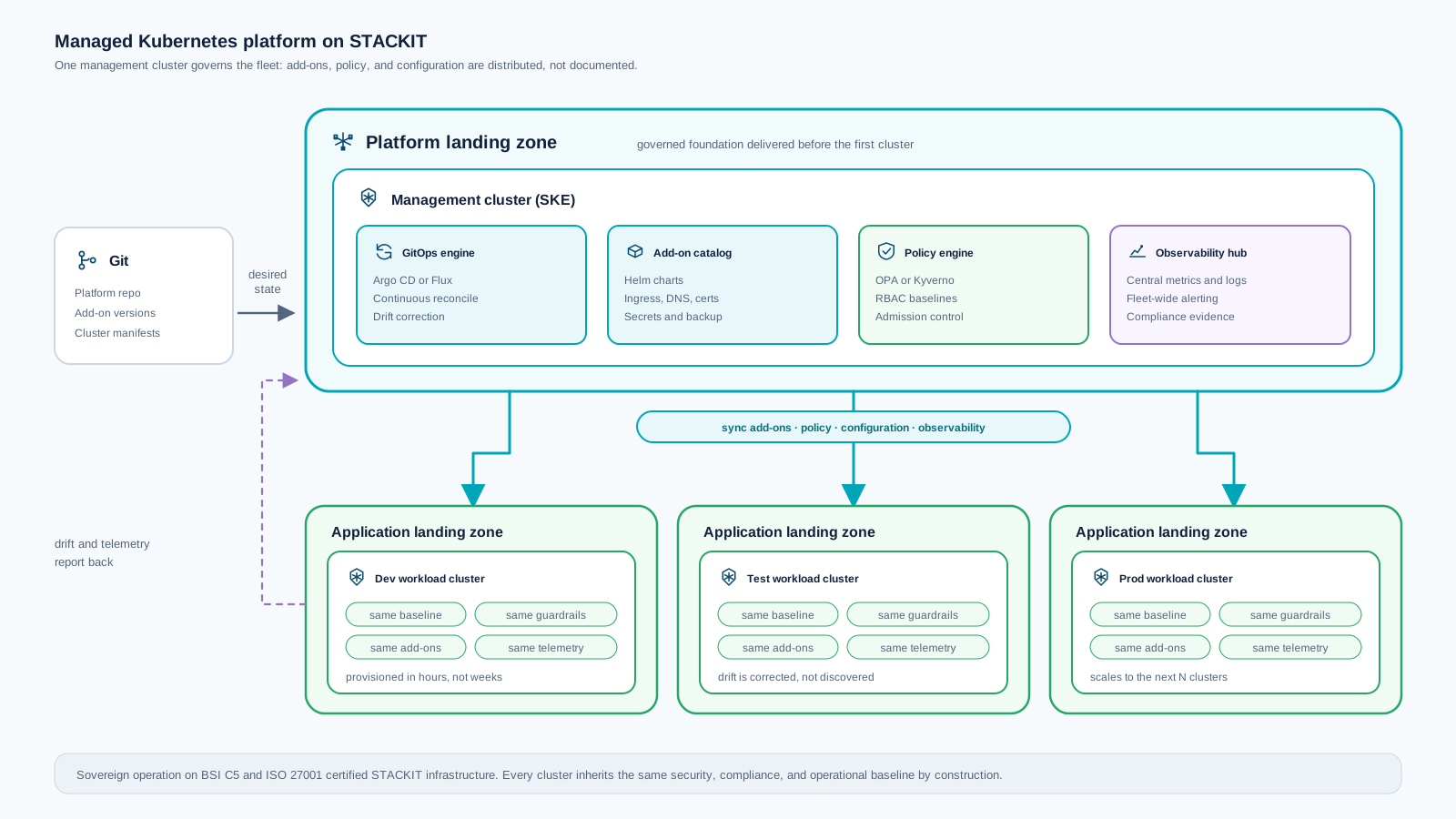
The Managed Kubernetes Platform on STACKIT is a PRODYNA service offer for establishing an enterprise-grade, multi-cluster container platform on sovereign STACKIT infrastructure.
The platform is built around a central management cluster that distributes add-ons, Helm charts, and standardized configuration fleet-wide, so every workload cluster inherits the same security, compliance, and operational baseline. Typical delivery runs 8 to 12 weeks and results in a production-ready platform plus a roadmap for further platform maturity and fleet expansion.
Organizations running containerized workloads across multiple teams and environments regularly hit the same wall: inconsistent cluster configuration, manual provisioning, thin governance, and growing security and compliance risk. Without a platform approach, operational complexity grows with every additional cluster.
A one-day discovery workshop with key stakeholders assesses the current infrastructure, workloads, and compliance requirements. Within the same week the target architecture and landing zone strategy are agreed.
Deliverable: Kickoff alignment, cloud strategy fit, and an assessment of the current platform landscape with the resulting target architecture decisions.
The management cluster is deployed into a landing zone project and serves as the central control plane for the fleet. Expect roughly three to four weeks for this phase.
Deliverable: Production-ready management cluster with CI/CD and governance tooling.
Initial workload clusters for Dev, Test, and Prod are provisioned, with add-ons and configuration synchronized from the management cluster. Expect roughly two to three weeks.
Deliverable: Operational workload clusters with developer self-service enabled.
The closing phase enables internal teams to operate the platform confidently. Expect roughly two to three weeks of knowledge transfer and handover.
Deliverable: Trained internal team capable of managing the full platform lifecycle.
Argo CD or Flux reconciles the desired state, and Crossplane extends the same loop to STACKIT resources so networks and databases are declared next to the workloads that use them. Which of the two engines you pick matters far less than committing to one and giving the whole fleet a single repository layout.
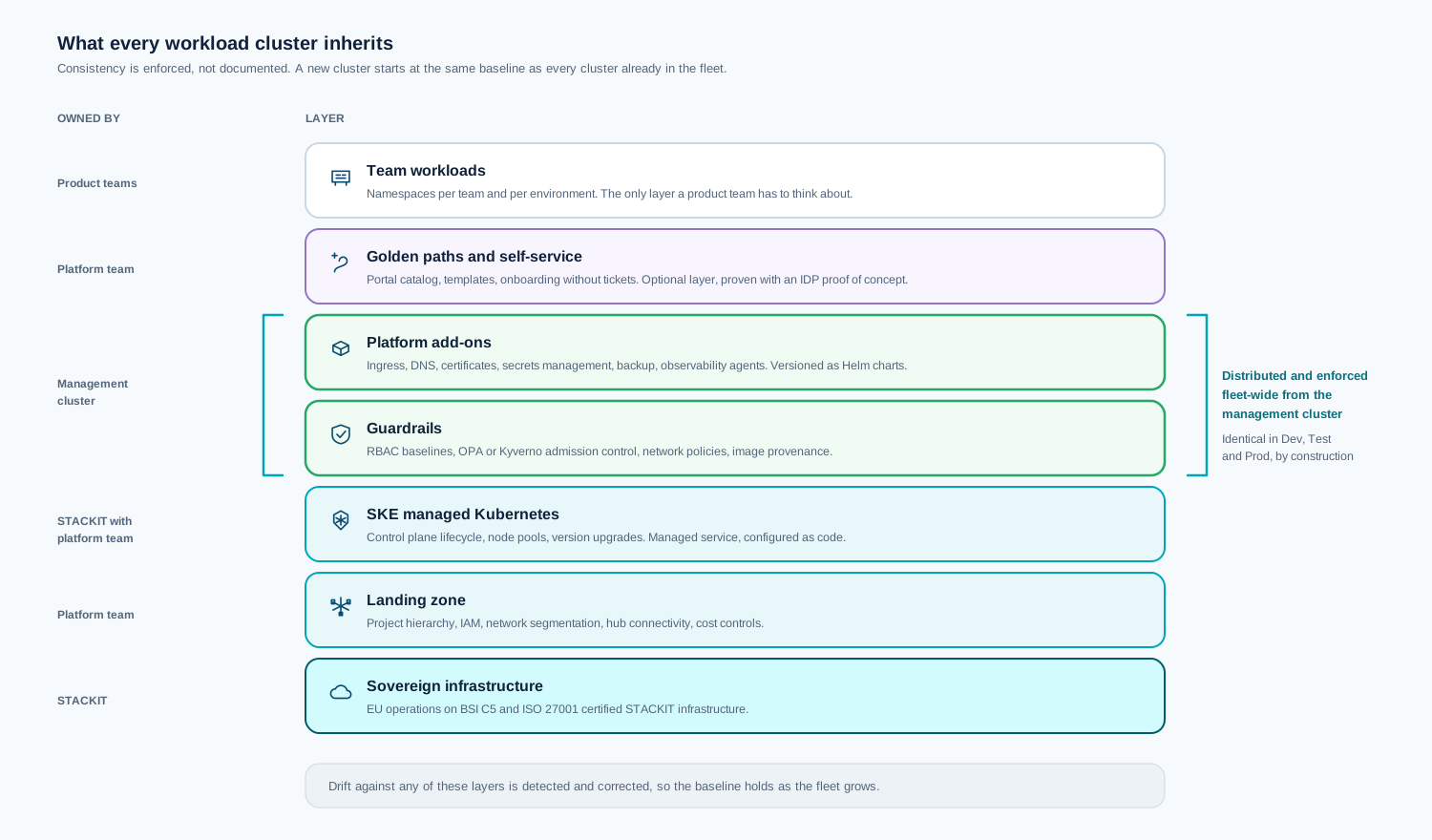
Define what every cluster inherits before the fleet exists: RBAC baselines, admission control through OPA or Kyverno, network policies, and the add-ons that carry ingress, secrets, backup, and observability.
Guardrails are distributed from the management cluster and reconciled continuously, so the baseline is identical in Dev, Test, and Prod and stays identical as the fleet grows. This is what makes BSI C5 and ISO 27001 operation an architectural property rather than an audit exercise.
PRODYNA
A consulting and engineering company for digital transformation delivery, from landing zones to application modernization.
The Managed Kubernetes Platform on STACKIT is a PRODYNA service offer for establishing an enterprise-grade, multi-cluster container platform on sovereign STACKIT infrastructure.
The platform is built around a central management cluster that distributes add-ons, Helm charts, and standardized configuration fleet-wide, so every workload cluster inherits the same security, compliance, and operational baseline. Typical delivery runs 8 to 12 weeks and results in a production-ready platform plus a roadmap for further platform maturity and fleet expansion.
Organizations running containerized workloads across multiple teams and environments regularly hit the same wall: inconsistent cluster configuration, manual provisioning, thin governance, and growing security and compliance risk. Without a platform approach, operational complexity grows with every additional cluster.
A one-day discovery workshop with key stakeholders assesses the current infrastructure, workloads, and compliance requirements. Within the same week the target architecture and landing zone strategy are agreed.
Deliverable: Kickoff alignment, cloud strategy fit, and an assessment of the current platform landscape with the resulting target architecture decisions.
The management cluster is deployed into a landing zone project and serves as the central control plane for the fleet. Expect roughly three to four weeks for this phase.
Deliverable: Production-ready management cluster with CI/CD and governance tooling.
Initial workload clusters for Dev, Test, and Prod are provisioned, with add-ons and configuration synchronized from the management cluster. Expect roughly two to three weeks.
Deliverable: Operational workload clusters with developer self-service enabled.
The closing phase enables internal teams to operate the platform confidently. Expect roughly two to three weeks of knowledge transfer and handover.
Deliverable: Trained internal team capable of managing the full platform lifecycle.
A portal turns the platform into a catalog: a team picks a template and receives a repository, a pipeline, and a namespace with the baseline already applied, without filing a ticket. Worth proving with a small pilot during the rollout rather than deferring it to a later project.
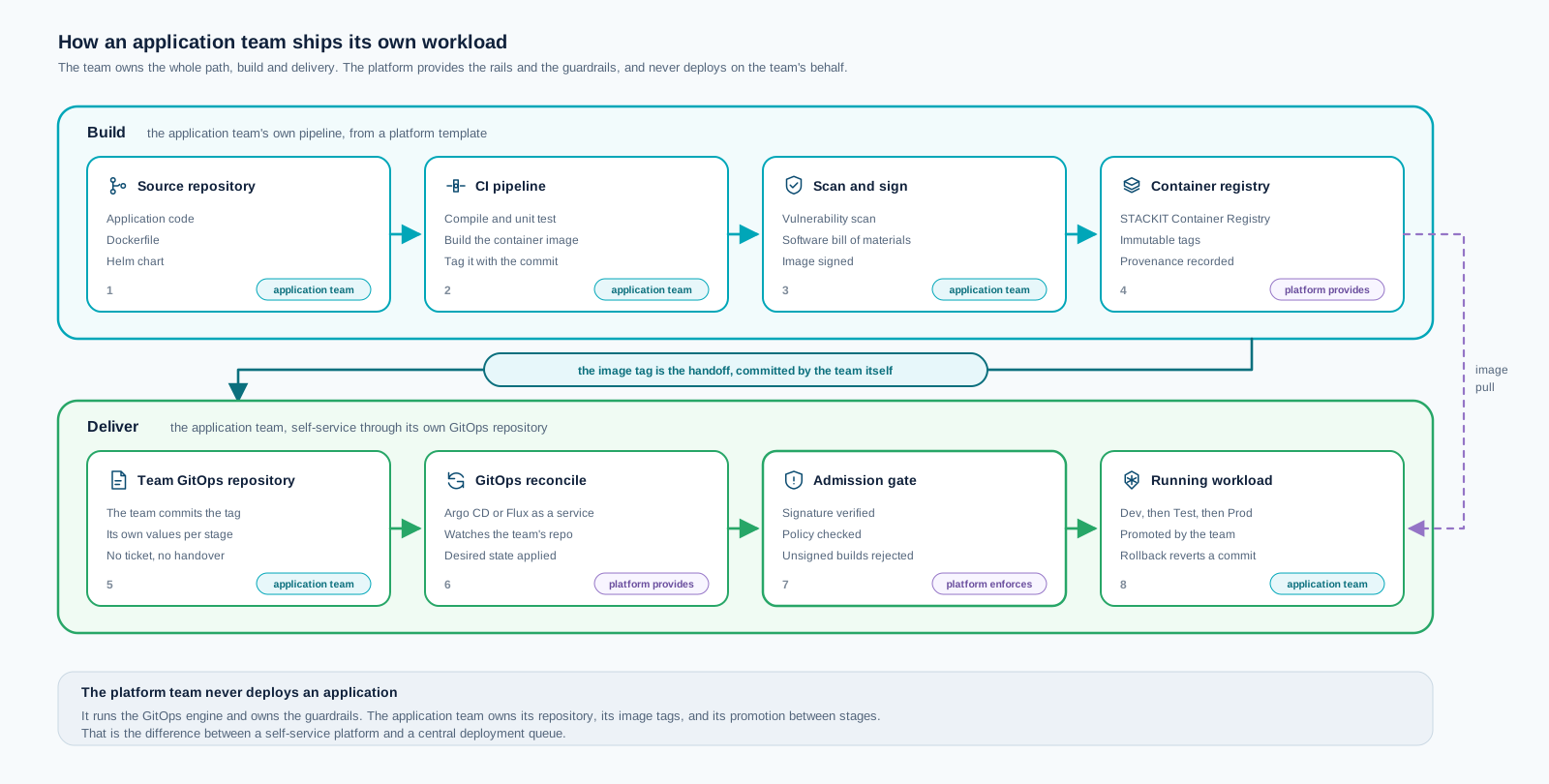
A platform proves itself when workloads run on it. The first application walks the whole path end to end: built and tested in CI, scanned and signed, stored in the container registry, then delivered into the cluster by the same GitOps engine that governs the fleet.
The image tag is the handoff between CI and GitOps, which is why the pipeline never needs cluster credentials. The admission gate rejects anything unsigned or non-compliant before it reaches a node, promotion between Dev, Test, and Prod changes values rather than manifests, and a rollback is a reverted commit rather than a manual intervention. Once the first workload has walked this path, every team after it inherits the same route as a paved road.
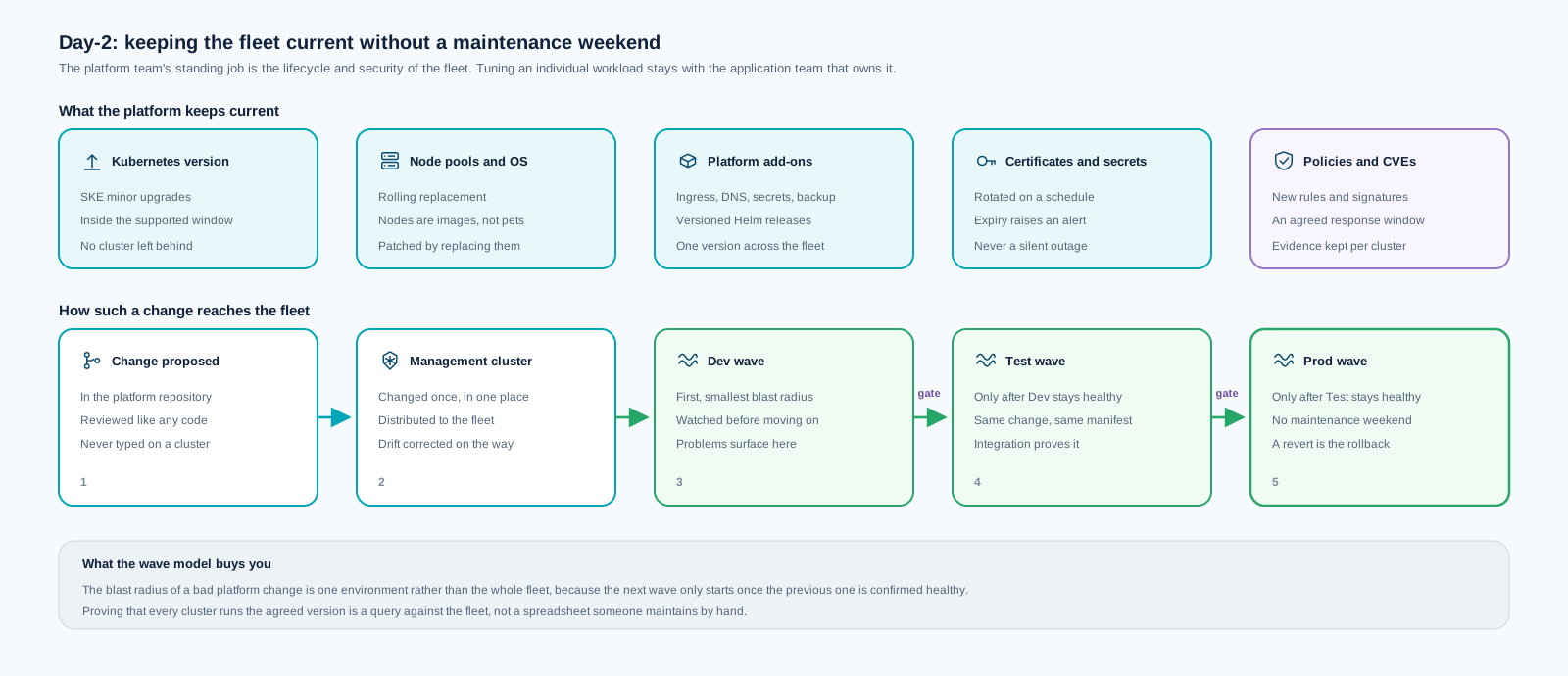
Day-2 is where a platform is won or lost. The standing job is keeping the whole fleet current and provably healthy: Kubernetes versions, node images, add-on releases, certificate rotation, and the response window for new policies and CVEs.
Each of those changes is made once in the platform repository and rolled out in waves, Dev first, then Test, then Prod, with every wave gated on the previous one staying healthy. A wave that does not come up healthy stops the rollout, so the blast radius of a bad platform change is one environment rather than the whole fleet, and proving that every cluster runs the agreed version is a query against the fleet rather than a spreadsheet someone maintains by hand. Tuning an individual workload is deliberately not on this list. That belongs to the application team that owns the workload.
PRODYNA
A consulting and engineering company for digital transformation delivery, from landing zones to application modernization.
The Managed Kubernetes Platform on STACKIT is a PRODYNA service offer for establishing an enterprise-grade, multi-cluster container platform on sovereign STACKIT infrastructure.
The platform is built around a central management cluster that distributes add-ons, Helm charts, and standardized configuration fleet-wide, so every workload cluster inherits the same security, compliance, and operational baseline. Typical delivery runs 8 to 12 weeks and results in a production-ready platform plus a roadmap for further platform maturity and fleet expansion.
Organizations running containerized workloads across multiple teams and environments regularly hit the same wall: inconsistent cluster configuration, manual provisioning, thin governance, and growing security and compliance risk. Without a platform approach, operational complexity grows with every additional cluster.
A one-day discovery workshop with key stakeholders assesses the current infrastructure, workloads, and compliance requirements. Within the same week the target architecture and landing zone strategy are agreed.
Deliverable: Kickoff alignment, cloud strategy fit, and an assessment of the current platform landscape with the resulting target architecture decisions.
The management cluster is deployed into a landing zone project and serves as the central control plane for the fleet. Expect roughly three to four weeks for this phase.
Deliverable: Production-ready management cluster with CI/CD and governance tooling.
Initial workload clusters for Dev, Test, and Prod are provisioned, with add-ons and configuration synchronized from the management cluster. Expect roughly two to three weeks.
Deliverable: Operational workload clusters with developer self-service enabled.
The closing phase enables internal teams to operate the platform confidently. Expect roughly two to three weeks of knowledge transfer and handover.
Deliverable: Trained internal team capable of managing the full platform lifecycle.

 Tobias M.Head of STACKIT Cloud Framework · STACKITOwnerActive 12 of the last 12 weeks · 168 updatesSTACKITwww.linkedin.com/in/tobias-müller-011304172??Name not publicThe Cloud Framework team knows who this is. The name is not shown on the site.Contributed in PRODYNA
Tobias M.Tobias M.Head of STACKIT Cloud Framework · STACKITOwnerActive 12 of the last 12 weeks · 168 updatesSTACKITwww.linkedin.com/in/tobias-müller-011304172
· Aug 26, 2026